
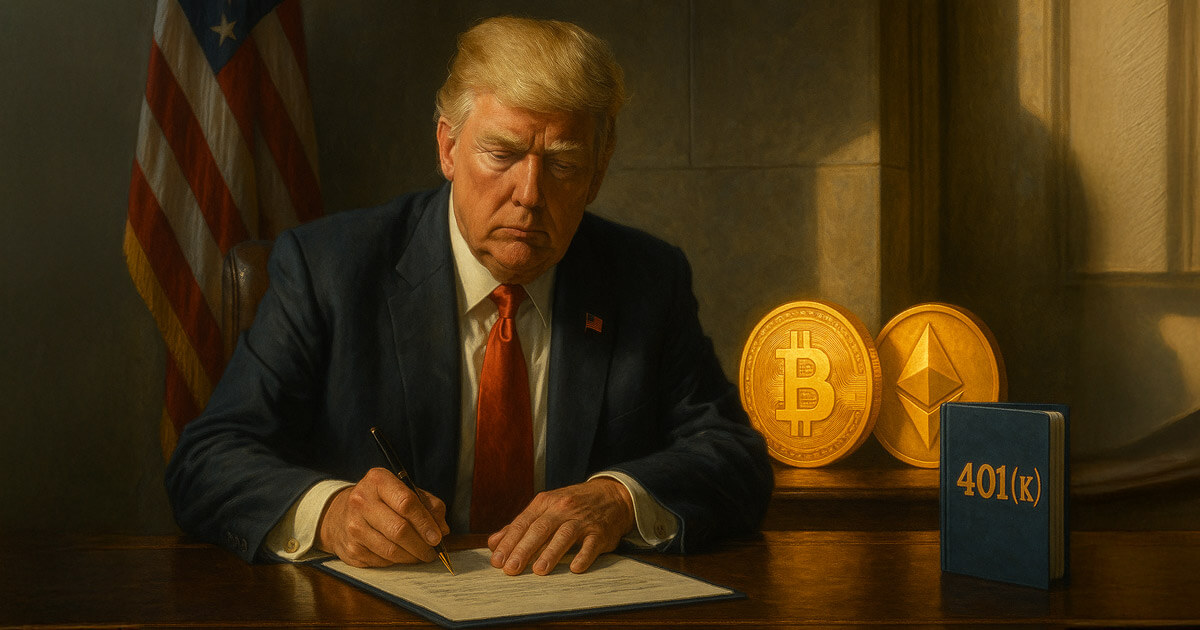
President Donald Trump is set to sign an executive order today that will have far-reaching implications for retirement savings in the United States. The directive aims to make it easier for 401(k) plans to include alternative assets such as private equity, real estate, crypto, and other non-traditional investments.
This move comes as part of a broader effort to reevaluate fiduciary guidance under the Employee Retirement Income Security Act (ERISA) and expand investment options for defined-contribution plans. With approximately $12.5 trillion in U.S. retirement savings potentially being opened up to a wider range of assets, this policy shift could have significant implications for the asset management industry.
The directive builds on previous measures taken by the Trump administration to dismantle regulatory barriers to alternative assets. In May, the Labor Department rescinded a compliance bulletin that had placed restrictions on offering crypto in retirement plans, signaling a more open approach to evaluating all types of assets under a consistent prudence standard.
In March, Trump also signed an executive order creating a Strategic Bitcoin Reserve and a pool of digital assets for national reserves. This was followed by the signing of the GENIUS Act, the first federal legislation to regulate stablecoins. With venture capitalist David Sacks appointed as crypto and AI czar, the administration has made it clear that it is committed to fostering financial innovation through digital assets.
Allowing crypto in 401(k) plans represents a significant shift in market access and reflects the growing importance of private equity, venture capital, and digital assets in capital formation. While institutional investors have increasingly embraced these alternative investments, retail savers have been limited to more traditional instruments. By opening up defined-contribution plans to these asset classes, asset managers see an opportunity to tap into a new source of capital.
The new directive mirrors actions taken during Trump’s first term, when the Labor Department allowed private equity to be included in retirement plans without violating fiduciary duty. This guidance was later rolled back but has now been reinstated through this new initiative, aiming to reduce compliance risks for plan sponsors and provide retail savers with access to a wider range of investment options.
Critics of the directive argue that complex assets could increase risk for savers without the necessary financial knowledge, while supporters believe that savers should have access to a full range of investment opportunities. The Department of Labor will work with the SEC and other agencies to assess further rulemaking, with firms like Blackstone, Apollo, and KKR poised to benefit from increased access to private market assets in 401(k) plans.
Overall, the executive order represents a significant step towards integrating alternative assets into mainstream retirement products and marks another milestone in the administration’s efforts to incorporate crypto into the national economic infrastructure. The impact of this policy change will depend on the implementation steps taken by federal agencies, but it is clear that the landscape of retirement savings in the U.S. is set to undergo a significant transformation.