
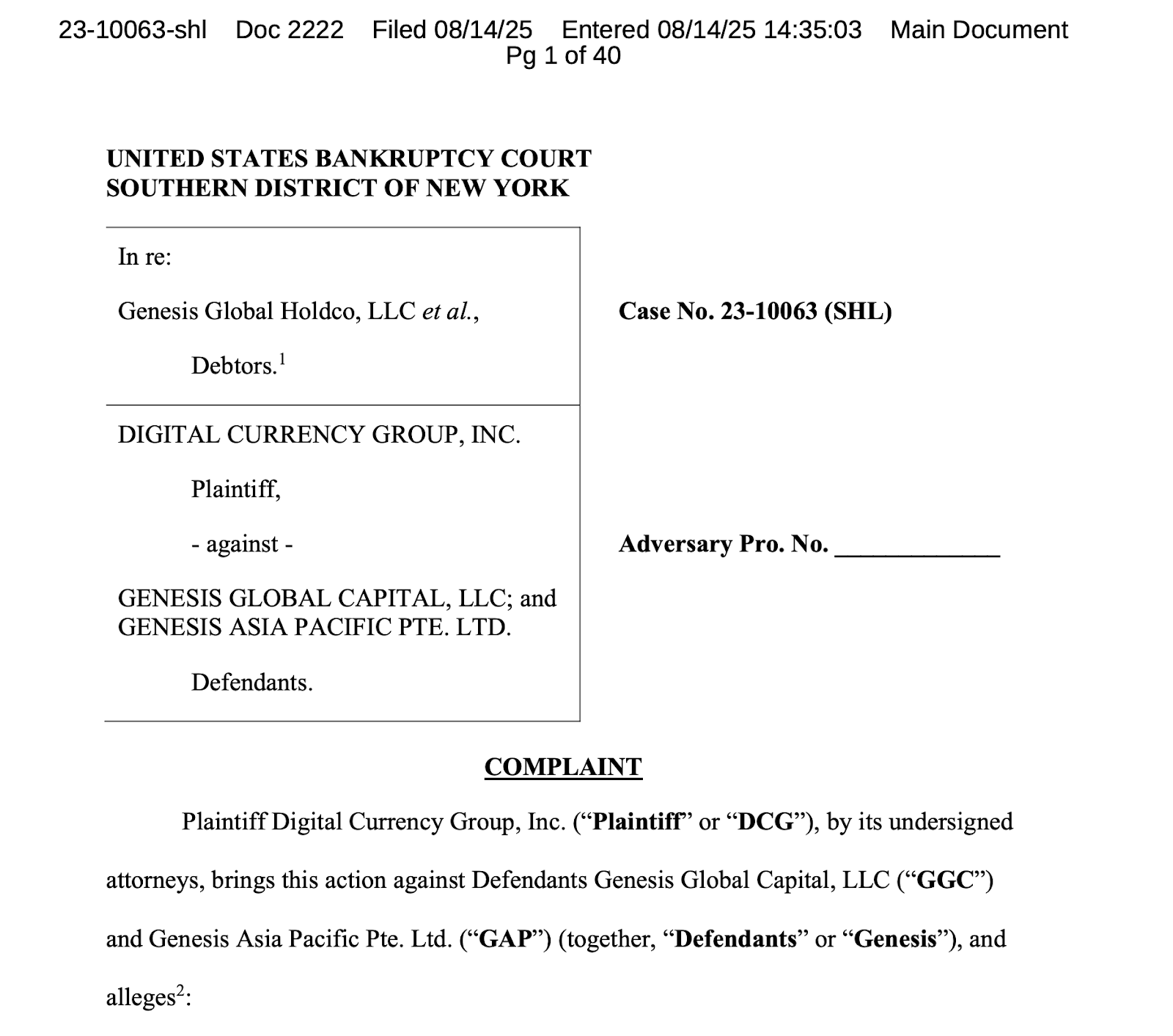
Digital Currency Group (DCG) is embroiled in a fierce legal battle with its bankrupt subsidiary Genesis Global Capital, with the stakes reaching a staggering $1.1 billion in promissory note relief and $105 million in alleged overpayments. The escalation of this conflict comes as Genesis pursues damages exceeding $3.1 billion against its parent company through a series of ongoing lawsuits.
The origins of this corporate war can be traced back to June 2022 when Three Arrows Capital defaulted on $2.36 billion in loans from Genesis, prompting DCG to issue a $1.1 billion promissory note to mitigate potential losses from the hedge fund’s collapse. The note included provisions for automatic reduction based on any recoveries from Three Arrows Capital’s assets. Following the recovery of nearly $2.8 billion from Three Arrows Capital, primarily through GBTC shares, DCG claims that the promissory note’s principal was reduced to zero as per the original agreement terms. However, payments totaling $106 million were made to Genesis under a purported “misapprehension” about the note’s remaining balance, leading to the current legal battle.
The legal skirmish intensified following Genesis’s bankruptcy filing in January 2023 after accumulating $3.5 billion in debts. Unsealed court documents revealed concerns among DCG executives about Genesis possibly being treated as their “alter ego” as early as 2022, with the CFO warning of potential corporate veil piercing scenarios.
Genesis has retaliated by seeking $2.2 billion in crypto assets through Delaware courts and over $1 billion in allegedly fraudulent transfers in the New York bankruptcy court. The Securities and Exchange Commission also joined the fray in January 2025, fining DCG $38 million for securities violations and former Genesis CEO Michael Moro $500,000 for misleading investors about the company’s financial health post-Three Arrows Capital’s collapse.
Internal documents from Genesis’s Litigation Oversight Committee paint a picture of DCG exploiting the subsidiary as a “de facto treasury,” extracting value through insider loans and risky trades. Allegations of fraudulent transactions, including the promissory note and a round-trip deal to mask financial distress, further tarnish DCG’s reputation. Despite these challenges, Genesis has made significant strides in returning funds to creditors, distributing $2.18 billion to users by May 2024.
The legal battles continue as both companies navigate bankruptcy restructuring, regulatory scrutiny, and creditor claims stemming from the 2022 crypto market collapse. The post DCG Countersues Genesis for $1.1B highlights the complexities and conflicts in the world of digital currency and finance.