
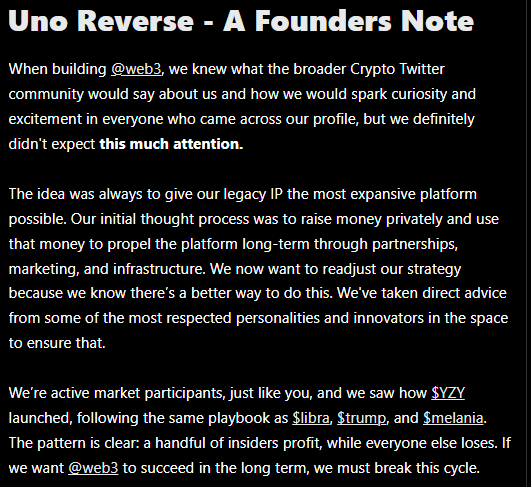
A new token presale has recently come under intense scrutiny after blockchain investigator ZachXBT raised concerns about potential ties to individuals involved in past NFT scams. The project, named WEB3, launched its token presale through its official X account, prompting users to send SOL to a specified wallet address in exchange for $WEB3 tokens.
The WEB3 token price was set to be determined by the amount of SOL raised divided by the total supply, with the presale ending at any time. Despite raising $500k in just 3 hours and having less than 12 hours left, the project faced immediate backlash due to its alleged connections to figures behind previous rug pulls.
ZachXBT quickly sounded the alarm, pointing out links between WEB3 and individuals associated with notorious scams like the Squiggles NFT collection and the alleged scammer known as Raichu. The Squiggles scandal in early 2022 revealed manipulative tactics used to inflate sales volume and deceive investors, ultimately leading to OpenSea delisting the collection.
Raichu, also known as Ryan, has been connected to multiple rug pulls, including the Baller Ape Club and the Crazy Lemur Club, where significant amounts of funds were lost. Despite WEB3’s claims of promoting fairness and transparency, the project’s ties to individuals with a history of fraudulent activities raised red flags within the crypto community.
WEB3’s team defended the project against scam allegations, labeling them as “FUD” (Fear, Uncertainty, and Doubt) and highlighting transparency measures to prove legitimacy. The team emphasized that the token had not launched before and distanced itself from an individual named Arsalan accused of unauthorized fundraising.
As crypto-related crimes continue to rise, with hackers stealing millions of dollars from exchanges and projects, ZachXBT’s vigilance in uncovering fraud remains crucial. Recent exposés on North Korean operatives targeting crypto projects underscore the ongoing threats faced by the industry.
The controversy surrounding the WEB3 presale serves as a reminder of the importance of due diligence in the crypto space. Despite the project’s attempts to address concerns and promote transparency, the shadow of past scams looms large, casting doubt on the integrity of the presale.
In a climate where trust is paramount, projects must be vigilant in vetting team members and partners to avoid associations with individuals involved in fraudulent activities. As the crypto community continues to evolve, maintaining a commitment to integrity and accountability will be essential in building a sustainable and trustworthy ecosystem.