
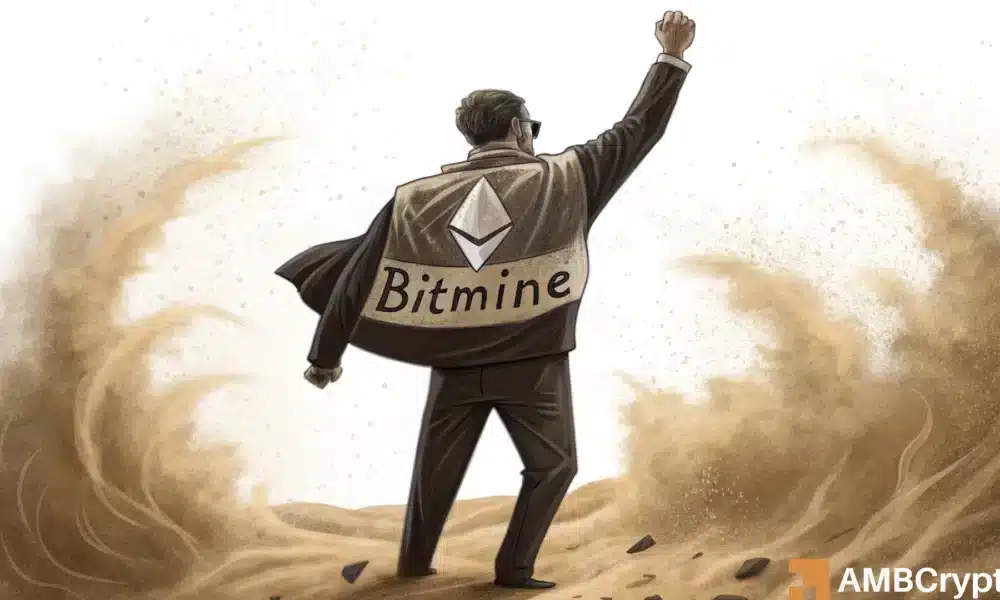
BitMine, the world’s largest Ethereum (ETH) holder, has made headlines by acquiring over 2.15 million ETH valued at nearly $11 billion. This move is part of BitMine’s strategy to reach a 5% supply target, although it currently faces $284 million in unrealized losses due to an average entry price of $4,632.
In a recent update on its assets under management (AUM), BitMine disclosed a total of $10.77 billion in holdings. This includes the aforementioned ETH stack, along with 192 BTC, a $214 million equity stake in Eightco (NASDAQ: ORBS), and $569 million in cash reserves. The company’s investment in Eightco exemplifies its approach to diversification, with strategic bets in revenue-driving ventures.
Unlike MicroStrategy, which has accumulated a significant amount of BTC through debt financing, BitMine (NASDAQ: BMNR) is focusing on a more balanced portfolio of assets. Despite a 94% decline in its stock price from its peak, BitMine’s cash flow remains strong, positioning its Ethereum holdings as a high-risk, high-reward play rather than a core revenue driver.
Fundstrat Research’s analysis suggests a potential upside for ETH in the range of $12,000 to $22,000 per coin, representing a significant return on investment. This forecast is based on the historical relationship between ETH and BTC prices, with ETH potentially reaching new highs as Bitcoin’s value continues to rise.
With its substantial ETH holdings, diversified revenue streams, and alignment with Bitcoin’s trajectory, BitMine is strategically positioned to capitalize on the next wave of institutional interest in cryptocurrencies. By taking calculated macro trades and leveraging high-beta assets, BitMine is poised to capture opportunities in the evolving crypto landscape.
In conclusion, BitMine’s bold bet on Ethereum underscores its commitment to innovation and strategic growth in the digital asset space. As the company continues to navigate the volatile crypto market, its unique approach to investment and diversification sets it apart from traditional players in the industry. Plastic pollution is a global crisis that is having devastating effects on our environment. Every year, millions of tons of plastic waste end up in our oceans, rivers, and landfills, causing harm to wildlife, marine ecosystems, and human health. It is estimated that by 2050, there will be more plastic in the ocean than fish if we do not take immediate action to reduce our plastic consumption and improve waste management practices.
Plastic pollution is a complex issue with multiple causes, including the production and disposal of single-use plastics, inadequate recycling infrastructure, and poor waste management practices. The proliferation of plastic packaging, bottles, bags, and other products has led to a massive increase in plastic waste that is not being properly disposed of or recycled. This waste often ends up in our oceans, where it breaks down into smaller pieces known as microplastics, which can be ingested by marine life and enter the food chain.
The impact of plastic pollution on marine ecosystems is severe. Marine animals such as sea turtles, birds, and fish can become entangled in plastic debris or mistake it for food, leading to injury or death. Plastic pollution also poses a threat to coral reefs, which are vital ecosystems that support a diverse range of marine life. The chemicals released by plastics as they break down can leach into the water, contaminating the environment and harming marine organisms.
In addition to its environmental impact, plastic pollution also poses risks to human health. Studies have shown that microplastics can accumulate in seafood and enter our bodies through consumption, leading to potential health risks such as hormonal disruption and reproductive issues. The presence of plastic particles in drinking water sources is also a growing concern, as microplastics have been found in tap water and bottled water samples around the world.
Addressing the issue of plastic pollution requires a multi-faceted approach that involves individuals, businesses, governments, and the global community. Efforts to reduce plastic waste can include using reusable bags and containers, avoiding single-use plastics, supporting businesses that offer sustainable packaging options, and advocating for policies that promote recycling and waste management. Improving waste collection and recycling infrastructure is also crucial to preventing plastic waste from entering our oceans and landfills.
Ultimately, combating plastic pollution requires a shift towards a circular economy that prioritizes resource efficiency, waste reduction, and sustainable production practices. By working together to reduce our reliance on plastic and adopt more environmentally friendly alternatives, we can help protect our planet for future generations. It is up to all of us to take action and make a difference in the fight against plastic pollution.