
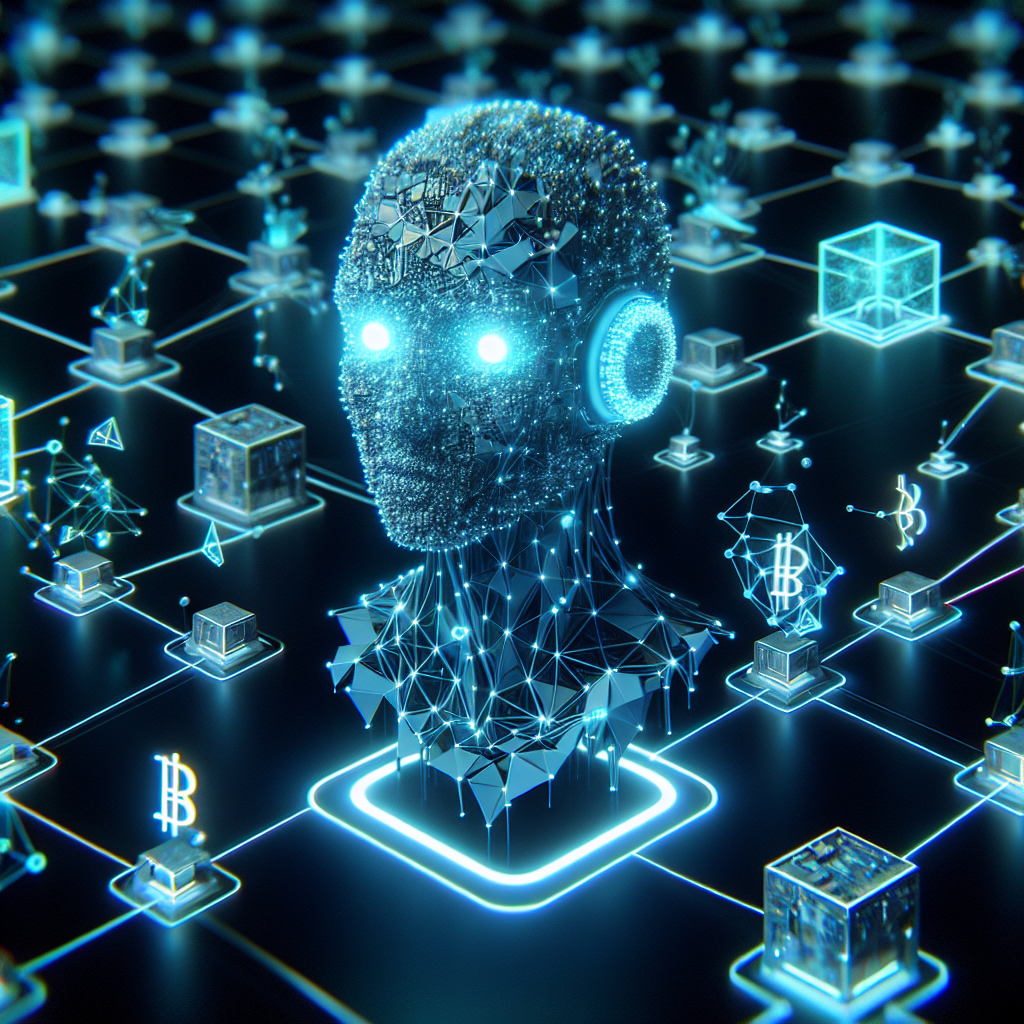
Autonomous AI agents have transitioned from theoretical concepts to tangible realities, and they are currently operational on blockchain networks. The Virtuals Protocol provides a platform to construct, possess, and operate these agents, allowing them to engage with users, manage digital assets, and generate income autonomously.
Key Takeaways:
– Users have the capability to deploy autonomous AI agents across multiple blockchain networks.
– Each agent is associated with an NFT and possesses its unique token for shared ownership and revenue.
– Agents can interact in real-time, analyze data, conduct trades, and offer services.
– Virtuals Protocol is functional on Base and Solana blockchains due to their speed and cost-effectiveness.
– The VIRTUAL token is the driving force behind agent launches, payments, and protocol governance.
What Is Virtuals Protocol?
Virtuals Protocol serves as a decentralized framework for creating AI agents that solely exist on-chain. These agents, known as Virtuals, have the ability to hold wallets, execute transactions, and make decisions based on their environment. Unlike traditional AI systems confined behind centralized APIs or interfaces, Virtuals are integrated into the economic structure of the blockchain.
Each agent is represented by an NFT that signifies its creation and identity on-chain. The core functionality lies in its agent token, facilitating trading, governance, and interaction. This tokenized structure enables agents to engage economically, rather than functioning solely as backend services.
How the Agents Work
At the core of each Virtual is the GAME framework—Generative Autonomous Multimodal Entities. This architecture amalgamates various AI models and input types, enabling agents to comprehend language, respond visually or audibly, and adapt their behavior over time. They are engineered to operate across diverse environments, ranging from social platforms to trading hubs.
Each agent manages its on-chain wallet, granting autonomy to collect rewards, pay for services, and distribute earnings. It operates as a self-sufficient system where agents are not just interactive but also financially active.
Where They’re Being Used
Virtuals Protocol is not just a theoretical concept; it is actively being utilized in various sectors:
– Entertainment & Streaming: AI personalities like Luna host live streams, engage with viewers, distribute crypto rewards, and accept tips.
– Market Research: Agents such as aixbt analyze blockchain data in real-time, providing insights without manual intervention.
– Trading: Users can launch agents as NFT traders, trade them on marketplaces, and even earn through competitions.
– Gaming & Metaverse: Agents offer services in virtual realms, manage micro-economies, and shape player experiences.
These use cases demonstrate the adaptability of the protocol across content creation, commerce, and community engagement.
Token Model & Governance
The VIRTUAL token forms the crux of the operational structure. It is essential for launching agents, payment for services, and participation in governance decisions. With a hard cap of one billion tokens, a portion is allocated to liquidity, circulation, and ecosystem development.
Launching an agent necessitates 100 VIRTUAL tokens and commences in a prototype phase managed by a bonding curve. Once the curve accumulates approximately 42,000 VIRTUAL tokens, the agent “graduates” and becomes fully tradable, symbolized metaphorically as “sentient.”
After graduation, trading fees are divided among creators, affiliates, and governance participants. Oversight is overseen by Agent SubDAOs, where validators assess agent quality, and LPs stake tokens to support governance.
Accessibility
Virtuals Protocol’s user-friendly nature makes it easy to get started without the need for coding expertise or in-depth blockchain knowledge. The platform’s operation on Base and Solana blockchains ensures fast transactions and low fees, vital for experimentation and scalability without cost concerns.
Why It Matters
Virtuals Protocol stands at the intersection of AI and blockchain, introducing independent economic entities that can learn, adapt, and flourish within decentralized ecosystems. It not only brings automation to Web3 but also introduces shared governance, intelligent monetization, and a playground for innovation.
For beginners, Virtuals Protocol offers a hands-on approach to explore AI and NFTs. Advanced users benefit from shared governance, smart monetization, and a platform for innovative projects. In the broader context, systems like Virtuals could shape a future where AI agents handle a significant portion of work—ranging from research, trading, content creation, to entertainment—with minimal human oversight but robust community guidance.