
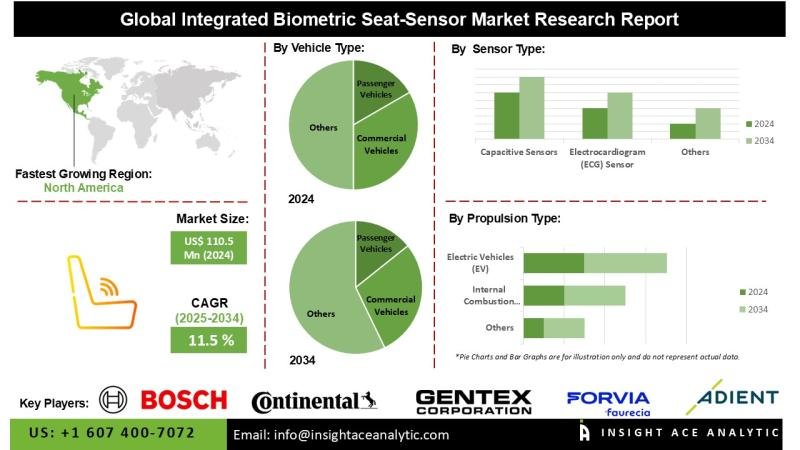
The integrated biometric seat-sensor market is experiencing significant growth, with a projected value of US$ 315.9 million by 2034, reflecting a CAGR of 11.5% from 2025 to 2034. This market is driven by the increasing adoption of advanced biometric seat-sensor systems in modern vehicles, which utilize various sensors to monitor and respond to occupants in real-time. These systems enhance safety, personalize the in-cabin experience, support secure transactions, and assess driver alertness.
One of the key factors fueling market growth is the rising consumer demand for proactive safety solutions that go beyond traditional crash prevention to include driver wellness and attention management. As vehicles transition to electric propulsion, there is a significant opportunity for the adoption of biometric seat-sensor technologies, especially in vehicles with digital architectures. However, challenges such as data privacy regulations, high implementation costs, and technical complexity may hinder scalability in price-sensitive markets.
Prominent players in the integrated biometric seat-sensor market include Adient plc, Bosch Mobility, Continental AG, Gentex, and TE Connectivity, among others. These companies are at the forefront of developing innovative biometric seat-sensor solutions to meet the evolving needs of the automotive industry.
In terms of market dynamics, the integrated biometric seat-sensor market is driven by the increasing emphasis on vehicle safety and the demand for personalized in-cabin experiences. However, challenges such as high development costs and privacy concerns surrounding biometric data collection may impede market growth. The Asia-Pacific region is expected to emerge as a leading market for integrated biometric seat-sensors, driven by a growing automotive sector and investments in advanced vehicle technologies.
Recent developments in the market include Continental AG’s unveiling of its third-generation “Bio-Sensing” seat platform and Bosch’s achievement of ASIL-D certification for its multi-modal seat sensor array. These advancements highlight the ongoing innovation in the integrated biometric seat-sensor market and its potential for further growth.
Overall, the integrated biometric seat-sensor market is poised for substantial expansion, driven by technological advancements, increasing consumer demand, and regulatory developments. As the automotive industry continues to evolve, biometric seat-sensor technologies will play a crucial role in enhancing vehicle safety, comfort, and user experience. The Effects of Social Media on Mental Health
In today’s digital age, social media has become an integral part of our daily lives. From keeping in touch with friends and family to staying informed about current events, social media platforms like Facebook, Instagram, Twitter, and TikTok offer a seemingly endless stream of content to consume. However, while social media can be a valuable tool for communication and connection, it also has the potential to negatively impact our mental health.
One of the most significant ways in which social media can affect mental health is through comparison. When we scroll through our feeds and see carefully curated posts from others showcasing their seemingly perfect lives, it’s easy to feel inadequate and envious. This can lead to feelings of low self-esteem, anxiety, and depression as we compare ourselves to others and feel like we don’t measure up. Additionally, the constant exposure to unrealistic beauty standards and lifestyle ideals on social media can contribute to body image issues and eating disorders.
Another way in which social media can impact mental health is through the phenomenon of “doomscrolling.” This term refers to the habit of endlessly scrolling through negative news and content on social media, which can lead to feelings of overwhelm, hopelessness, and anxiety. The constant barrage of distressing information can take a toll on our mental well-being and contribute to feelings of fear and uncertainty about the future.
Moreover, social media can also have a detrimental effect on sleep patterns and overall mental health. The blue light emitted by screens can disrupt the production of melatonin, the hormone that regulates sleep, leading to difficulty falling asleep and poor quality rest. Inadequate sleep has been linked to a variety of mental health issues, including mood disorders, cognitive impairment, and decreased overall well-being.
Despite these negative impacts, it’s important to note that social media can also have positive effects on mental health. For many people, social media serves as a valuable source of support and connection, especially during times of isolation or crisis. Platforms like Facebook groups and Twitter communities can provide a sense of belonging and camaraderie, allowing individuals to connect with others who share similar interests or experiences.
In conclusion, while social media can be a powerful tool for communication and connection, it’s essential to be mindful of its potential impact on mental health. By setting boundaries, limiting screen time, and curating our feeds to prioritize positive and uplifting content, we can mitigate the negative effects of social media and foster a healthier relationship with technology. Ultimately, finding a balance between using social media as a tool for connection and self-expression while also prioritizing our mental well-being is key to navigating the digital landscape in a healthy and sustainable way.