

Trump’s Big Beautiful Bill no longer includes a 10-year moratorium on AI regulation, causing setbacks for AI-related tokens. Trade volumes and market cap for AI cryptoassets both dropped over 5% in the past 24 hours.
Despite pro-crypto legislators abandoning the effort, Senators voted overwhelmingly against the moratorium in a 99-1 vote. The market sector was already experiencing a downturn, making it challenging to gauge the bill’s impact.
Big Beautiful Bill’s Impact on AI
Trump’s Big Beautiful Bill, a comprehensive piece of legislation covering various topics, faced significant changes due to intense political controversies before finally passing the Senate.
However, the Senate’s rejection of the bill’s AI support language reflects a substantial blow to the industry as a whole.
The near-unanimous vote signals widespread apprehension towards the industry, with only Senator Thom Tillis supporting the bill, who has announced he won’t seek re-election.
With many cryptoassets tied to the AI industry, the market sector has suffered significant losses following the bill’s language changes, with both market cap and volume declining over 5%:
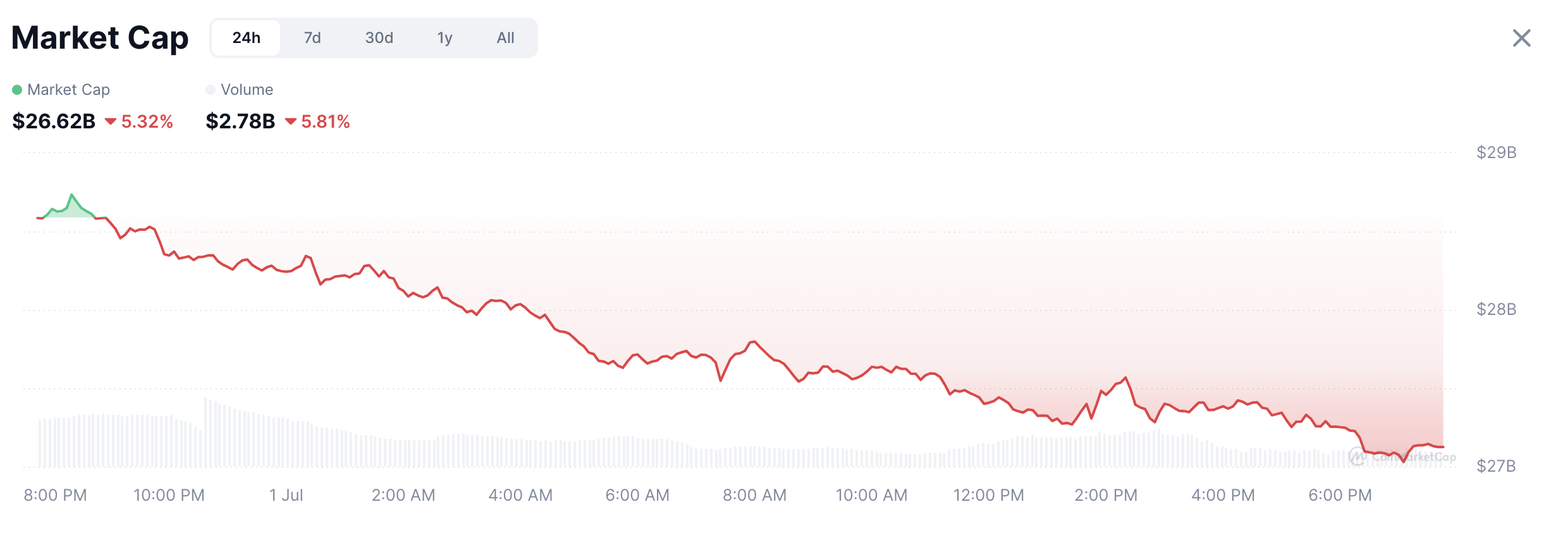
AI Sector Market Cap. Source: CoinMarketCap
Several questions arise from this development. What were the Big Beautiful Bill’s stances on AI? Why did the Senate overwhelmingly reject them? Will the AI token market continue to exhibit reduced trade volumes and market capitalization?
The bill originally proposed a 10-year moratorium on AI regulation for all US states, potentially through an outright ban or alternative means.
It aimed to establish a $500 million fund for AI infrastructure development, accessible only to states with no existing AI regulations. This plan had the backing of Google and OpenAI.
However, the bill’s approach raised concerns, leading even pro-crypto Senators to oppose it. A 10-year ban on AI regulation could leave states powerless to prevent future AI-related crimes, including fraud, copyright infringement, and disturbing simulations like child abuse, as cautioned by some Senators. Prominent Republicans like Marsha Blackburn distanced themselves from the initiative.
The long-term impact of the bill on the AI token market remains uncertain, given its unpredictability. For instance, Elon Musk’s criticism of the bill boosted several Musk-related meme coins, while Dogecoin experienced a drop of over 5%. This volatility may present new opportunities, albeit with unpredictability.
Moreover, the AI token sector was already facing challenges before the bill’s passage, with trade volumes plummeting over 38% in the last month. Despite legislative hurdles, the sector’s resilience against broader macroeconomic concerns remains to be seen.