
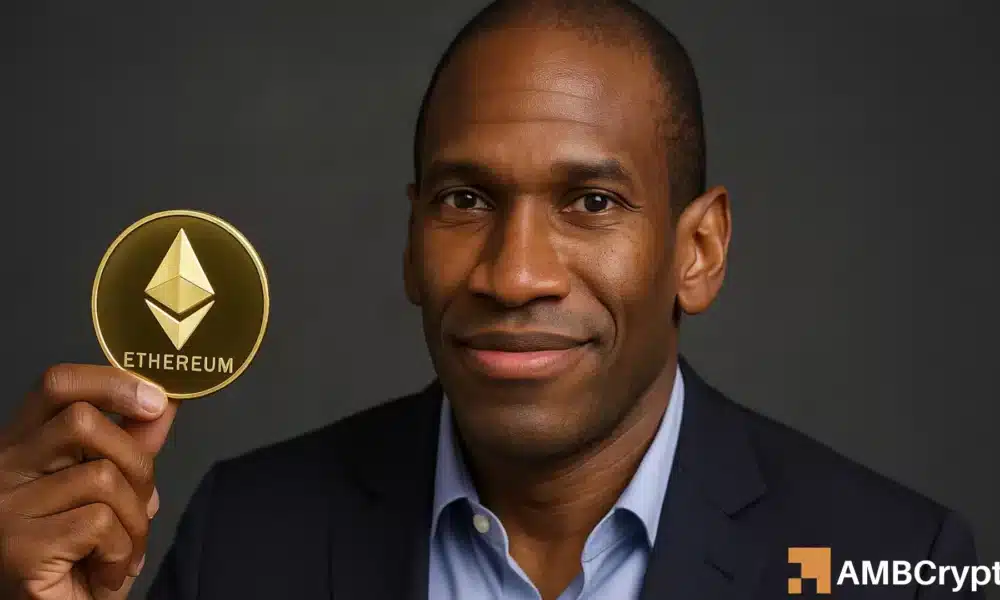
The cryptocurrency market is abuzz with excitement as Ethereum (ETH) continues its impressive rally, edging closer to the $500 billion market capitalization milestone. This surge in ETH’s value has sparked speculation among investors that decentralized finance (DeFi) tokens could be the biggest beneficiaries of this bullish trend.
Renowned crypto investor Arthur Hayes, founder of Maelstrom—a fund focused on decentralized tokens—recently expressed his belief in the potential of the DeFi market as ETH’s performance outshines other cryptocurrencies. Hayes took to X to share his views, stating that the “ETH szn” (Ethereum season) has arrived, signaling a significant uptick in DeFi verticals. He emphasized that if Ethereum continues to outperform, it will have a positive impact on the broader DeFi market, leading to substantial gains across various DeFi projects.
The correlation between Ethereum’s performance and DeFi activity is becoming increasingly evident, with the Artemis Sector Performance metric confirming this relationship. This metric, which calculates a weighted average based on changes in the fully diluted market capitalization of tokens within each sector, highlights the close alignment between ETH and DeFi sectors. In the past week alone, Ethereum ranked as the third-best-performing sector with a 14.2% growth rate, while the DeFi sector followed closely behind with a 10.6% increase, indicating a potential shift in DeFi tokens’ momentum.
As investors anticipate a DeFi boom fueled by Ethereum’s rally, attention is turning to specific DeFi tokens that are already outperforming the broader market. According to CoinMarketCap data, the total DeFi market capitalization has seen a 2.32% increase, with standout tokens like Hyperliquid (HYPE), DeepBook Protocol (DEEP), and Aerodrome Finance (AERO) posting remarkable gains of 180%, 137%, and 132% respectively over the past 90 days. These tokens are showing resilience and bullish momentum, suggesting they could lead the DeFi rally in the coming weeks.
Analyzing the price charts of these tokens, it is evident that Hyperliquid, DeepBook Protocol, and Aerodrome Finance have the potential to continue their upward trajectory despite short-term fluctuations. With Fibonacci levels pointing to possible support zones and resistance levels, these tokens are poised for further growth as they navigate the volatile crypto market.
As the DeFi sector gears up for a potential surge in value driven by Ethereum’s performance, investors are keeping a close eye on these promising DeFi tokens that could deliver substantial returns in the near future. With the market dynamics evolving rapidly, staying informed and making strategic investment decisions will be crucial in capitalizing on the growing DeFi trend. The Impact of Social Media on Mental Health
In today’s digital age, social media has become an integral part of our daily lives. We use platforms like Facebook, Instagram, Twitter, and TikTok to stay connected with friends and family, share moments of our lives, and consume information and entertainment. However, while social media has many benefits, it also has a dark side that can have a negative impact on our mental health.
One of the biggest issues with social media is the pressure to present a perfect image of our lives. On platforms like Instagram, where users often post curated and filtered photos of their lives, it’s easy to fall into the trap of comparing ourselves to others and feeling inadequate. This can lead to feelings of low self-esteem, jealousy, and even depression.
Social media also has the potential to amplify feelings of loneliness and isolation. While it can help us stay connected with friends and family, it can also make us feel more disconnected from real-life relationships. Spending too much time scrolling through our feeds can lead to a sense of FOMO (fear of missing out) and a constant need to be digitally connected, which can take a toll on our mental well-being.
Another issue with social media is the prevalence of cyberbullying. With the anonymity that the internet provides, people feel emboldened to say hurtful things online that they would never say in person. This can have devastating effects on the mental health of the victims, leading to feelings of shame, anxiety, and even thoughts of self-harm.
Despite these negative aspects, social media can also be a force for good when used mindfully. It can be a source of support and community for those who may feel isolated or alone. It can also be a platform for raising awareness about important issues and connecting with like-minded individuals.
To protect our mental health while using social media, it’s important to set boundaries and practice self-care. This may include limiting our screen time, unfollowing accounts that make us feel bad about ourselves, and being mindful of how we engage with others online. It’s also important to remember that what we see on social media is often a curated version of reality and not a true representation of someone’s life.
In conclusion, social media has become a powerful tool in our modern world, but it can also have negative effects on our mental health if not used mindfully. By being aware of the potential pitfalls of social media and taking steps to protect our well-being, we can enjoy the benefits of staying connected while maintaining a healthy mindset.