
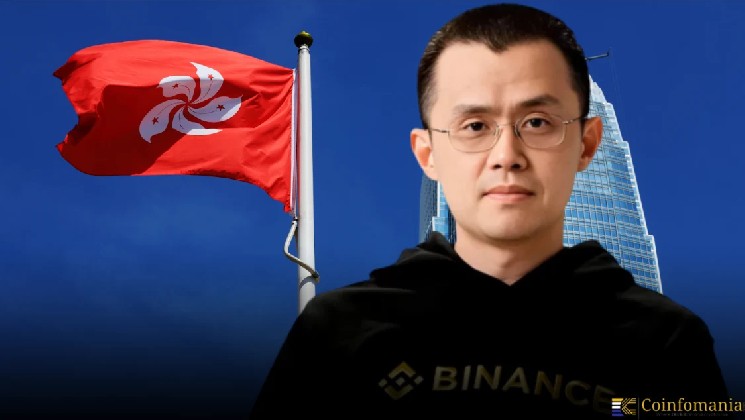
Founder of Binance CZ, Changpeng Zhao, recently shared his thoughts on the cryptocurrency landscape in Hong Kong, calling for more openness to a wider range of cryptocurrencies. Currently, Hong Kong only allows for the listing of four coins, including Bitcoin, Ether, Avalanche, and Chainlink. According to CZ, this limited selection is not enough to position Hong Kong as a strong hub for crypto listings. He urged regulators to adopt a more flexible approach, similar to that of Japan, where licensed exchanges have the freedom to list a broader range of tokens without being tied to specific financial indexes. This increased flexibility, CZ believes, could help Hong Kong compete with other global crypto hubs such as the United States, the UAE, and Japan.
Emphasizing Speed and Flexibility for Global Recognition
In a recent interview with the South China Morning Post, CZ expressed his appreciation for the Hong Kong government’s support of Web3 technologies. He highlighted the importance of regulatory speed and flexibility in shaping the future of Web3, emphasizing that rapid rule changes could lead to significant transformations in the industry. CZ pointed to Japan’s decentralized approach as a potential model for other jurisdictions to follow. Hong Kong is expected to unveil a more comprehensive policy on digital assets by the end of 2021.
Challenges Posed by Current Regulations
Under the existing rules set by the Securities and Futures Commission (SFC) in August 2023, only tokens listed in at least two major indexes, one of which must be finance-based, are approved for retail trading in Hong Kong. This has resulted in a limited selection of only four approved assets, stifling innovation and market growth. In contrast, countries like the United States and the UAE offer more flexibility for traders to access a wider range of tokens. CZ warned that these restrictions could deter investors and entrepreneurs from entering the Hong Kong market.
Progressive Regulatory Reforms
Regulatory reforms in Hong Kong extend beyond crypto listings to encompass various aspects of the virtual asset ecosystem. Recent developments include stricter custody requirements for virtual asset trading platforms, the introduction of stablecoin licensing regimes, and consultations on OTC and custodian structures. These initiatives reflect a broader effort to build a secure and inclusive virtual asset ecosystem. CZ highlighted the importance of stablecoin evolution and tokenization as part of this forward-looking vision.
In Conclusion
As Hong Kong aims to establish itself as a prominent crypto hub, CZ’s call for greater openness to a wider range of cryptocurrencies is timely. Limiting crypto listings to just four tokens could hinder market growth and deter investor interest. By expanding the range of tokens, streamlining regulations, and empowering exchanges, Hong Kong has the potential to rival leading digital asset hubs like the United States and the UAE. The upcoming policy changes will play a crucial role in determining whether Hong Kong emerges as a dominant player in the Web3 landscape in Asia.