
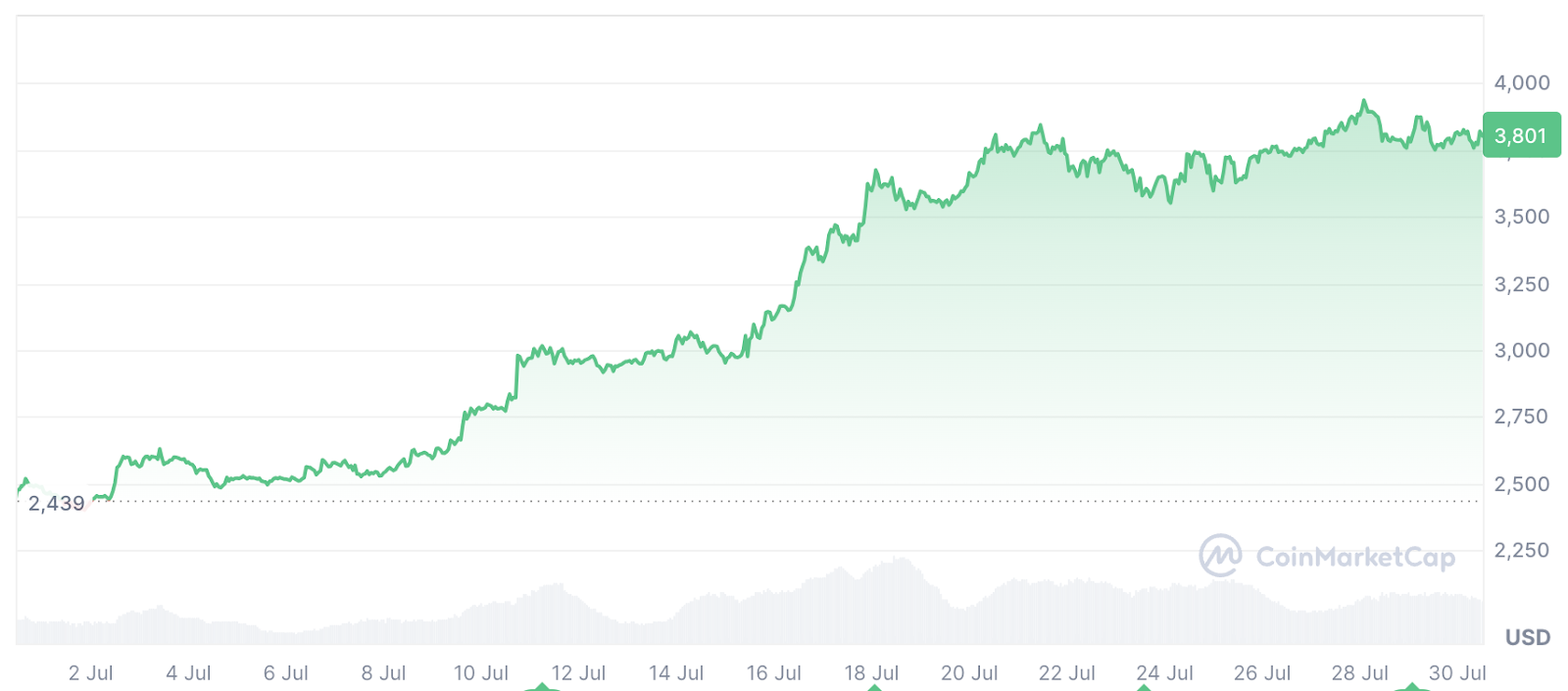
Bitcoin’s price movements in late July 2025 have sparked discussions about the state of the crypto bull market. Trading near $118,000 on July 30, Bitcoin is still close to its all-time high of around $123,000, but there has been a noticeable decrease in momentum in recent sessions. On the other hand, Ethereum has managed to hold steady near $3,800 after experiencing a significant surge of more than 50% during the month.
The Altcoin Season Index, which is often used as a gauge for the market’s altseason, has dropped to around 36. This indicates that Bitcoin is outperforming most altcoins, restricting the breadth of the rally. In past bull markets, broader gains across mid-cap tokens have been a key indicator of a full bull market, but the current reading suggests that traders are being more selective in their investments.
Institutional involvement remains a driving force in the market. A strategic Bitcoin reserve was established by a U.S. executive order in March 2025, solidifying the asset’s position in national holdings. Additionally, corporate treasuries have allocated over $86 billion to crypto this year, demonstrating a deeper level of institutional exposure compared to previous cycles.
JPMorgan estimates that more than $60 billion in new capital has flowed into the crypto markets so far in 2025, showcasing the strength of the bull market. This influx of capital is attributed to factors such as ETF adoption, venture capital funding, and increased confidence following regulatory clarity in various jurisdictions. The presence of institutional investors has helped sustain prices, even as speculative trading activity cools down.
Ethereum has been a major beneficiary of this trend, with ETF inflows driving demand and pushing the price of ETH above $3,800. Institutional investors have played a significant role in Ethereum’s rally, with daily volumes exceeding $15 billion, indicating strong liquidity.
Furthermore, the correlation between Bitcoin and traditional equities has weakened, with the BTC-S&P 500 correlation hovering around 0.2. This suggests that Bitcoin is moving more independently of traditional risk markets, potentially making it a more attractive investment option if equity markets remain volatile.
Despite these positive indicators, not all aspects of the market are bullish. Bitcoin dominance remains above 60%, indicating that capital has not yet flowed broadly into altcoins, delaying the onset of a true altseason. This limitation raises questions about whether the market has entered a phase of expansion typical of past bull runs.
Analysts hold differing views on the future of Bitcoin, with projections ranging from $150,000 to $200,000 by the end of 2025. Some point to the Federal Reserve’s upcoming September meeting as a potential factor that could dampen momentum if interest rate cuts do not materialize.
Volatility remains a defining feature of the market, with daily price swings of 3% to 5% being common. Traders are navigating between long-term optimism and short-term caution, while Ethereum continues to outperform Bitcoin with steady inflows, and most altcoins remain subdued.
As the market continues to show signs of strain, with high prices, strong institutional support, and growing adoption, the next few months will be crucial in determining whether the current cycle will resume its upward trajectory or consolidate further. The 2025 crypto bull market is at a crossroads, with uncertainties around monetary policy and the lack of a widespread altcoin rally keeping the market in a state of flux.