
Blockstream recently issued an urgent security alert warning users about a sophisticated phishing campaign targeting Jade hardware wallet owners through fake firmware update emails. The company confirmed that no data was compromised but emphasized that they never send firmware files via email communications.
Bitcoin developer Jimmy Song first reported the malicious emails, which claim to offer Jade firmware updates while directing users to download files from suspicious domains. The scam emails appear to originate from unrelated entities like restaurant managers, raising questions about how attackers obtained user email addresses.
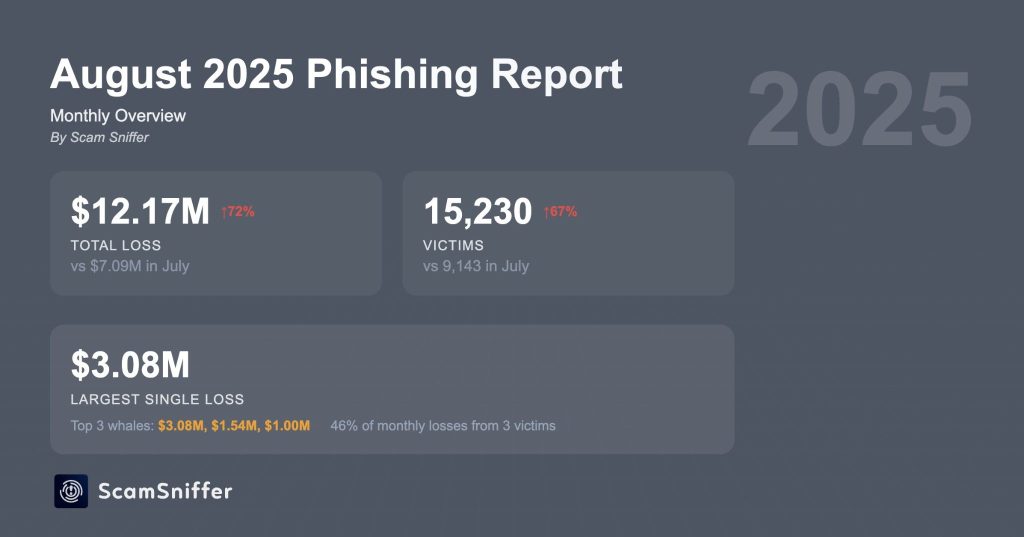
The warning comes as crypto phishing attacks have surged dramatically, with August losses reaching $12 million, affecting over 15,000 victims, a 67% increase from July. The first half of 2025 saw total crypto crime losses exceed $3.1 billion, with phishing scams accounting for $410 million across 132 separate attacks.
The fraudulent emails masquerade as legitimate Blockstream communications, instructing users to download firmware updates by clicking on malicious links. Security experts warn that the fake firmware likely redirects funds to attacker-controlled addresses once installed on hardware devices. Blockstream thanked Jimmy Song for the initial alert and reiterated its policy of never distributing firmware through email channels.
Community members noted inconsistencies within the scam emails, including mismatched version numbers and suspicious sender domains. One particularly concerning example showed emails originating from “General Manager of Adelphia Restaurant” directing downloads from “getbento.com” domains.
The targeting of hardware wallet users represents a significant escalation in phishing sophistication. Hardware wallets traditionally provide enhanced security compared to software alternatives, making their compromise particularly damaging to user funds and confidence. The precise mechanism by which attackers obtained user email addresses remains unclear, with community members questioning potential data breaches or social engineering campaigns.
August 2025 recorded the second-highest monthly crypto crime total this year, with $310 million stolen across various exploits, according to CertiK research. Phishing incidents dominated losses at $293 million, including two massive attacks stealing $238 million in Bitcoin and $55 million in DAI stablecoin.
Crypto crime has reached record levels amid advanced attack methods, with infrastructure attacks dominating the threat landscape. Protection strategies include verifying all communications through official channels, avoiding email-based software downloads, and implementing hardware security keys instead of SMS-based two-factor authentication.
Users are urged to bookmark legitimate websites rather than relying on search engines and remain skeptical of unsolicited communications claiming urgent security updates. It is essential to stay vigilant and cautious in the face of increasingly sophisticated cyber threats in the crypto space.