
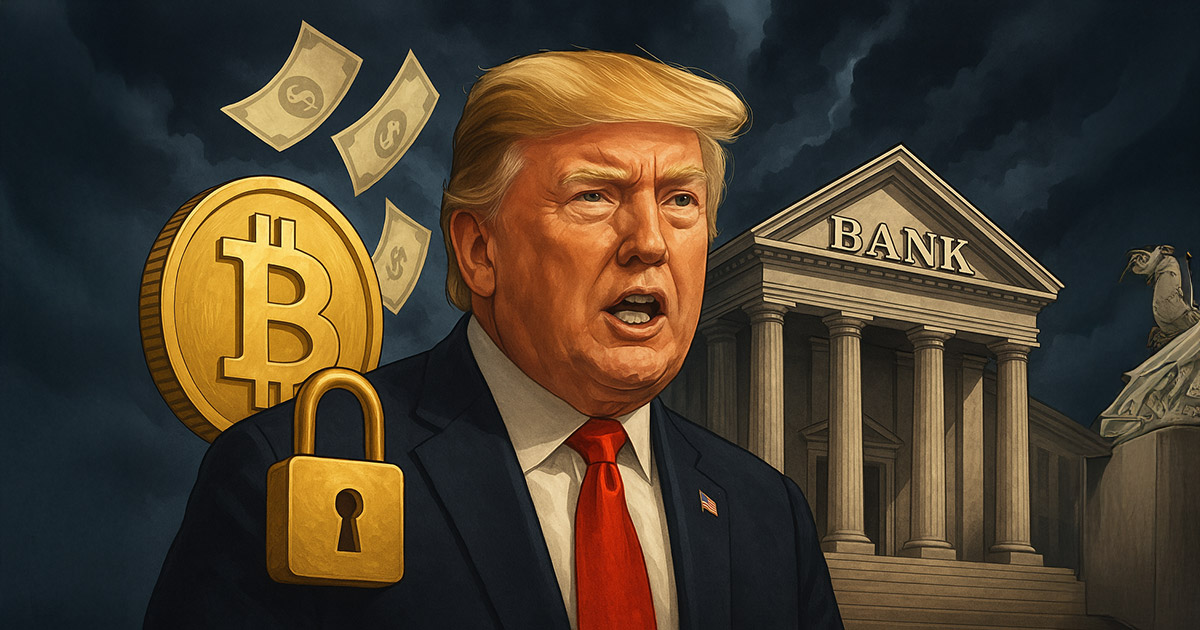
A coalition of crypto, fintech, and retail trade groups recently sent a letter to President Donald Trump, urging him to protect the nation’s open banking framework. They raised concerns about legal challenges from major banks that could threaten consumer data rights and hinder the administration’s innovation agenda.
The Financial Technology Association, Blockchain Association, Crypto Council for Innovation, and several national retail groups highlighted that big banks are trying to undo the progress made under Trump’s leadership. They are imposing high data access fees and challenging the open banking rule in court, which could limit Americans’ use of digital wallets, payment apps, and investing platforms that rely on secure bank connectivity.
The open banking rule, established during Trump’s first term, allows consumers to link their financial data to third-party services for free. It also sets security and privacy standards to balance the interests of fintech companies and banks, positioning the United States as a global leader in financial technology. However, the largest U.S. banks have filed lawsuits to block the rule’s implementation.
The trade groups argue that banks are taking advantage of regulatory uncertainty to maintain their dominance and stifle innovation, putting smaller competitors and emerging digital asset firms at a disadvantage. They emphasize that the administration’s brief in the ongoing case on July 29 is crucial in this legal battle.
The signatories are calling on the government to affirm that financial data belongs to consumers, who should be able to share it with fintech or crypto services without extra costs or restrictions. They warn that weakening consumer data rights could diminish the nation’s leadership in fintech and digital asset innovation, especially as other countries embrace open banking standards and blockchain-powered financial services.
The letter was signed by 11 organizations, including the Chamber of Progress, the Digital Chamber, the Financial Data and Technology Association, and major retail groups like the National Association of Convenience Stores, the National Restaurant Association, and the National Retail Federation. These groups represent millions of consumers and businesses relying on modern and affordable financial services.
As the U.S. faces increasing competition from global markets, it is crucial to uphold the open banking framework to foster innovation and protect consumer data rights in the rapidly evolving financial technology landscape.