
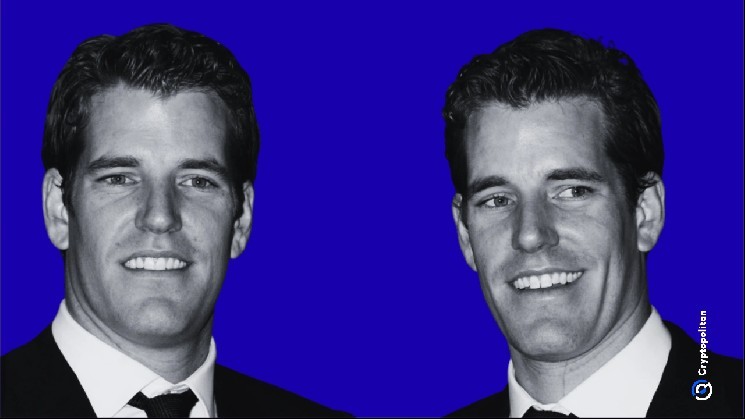
The Winklevoss twins have been making waves in the political arena, with their recent shift towards right-wing politics causing a stir in the crypto industry. What initially began as a rebellion in the tech world has now evolved into a full-fledged pivot towards the GOP, challenging the carefully cultivated political neutrality of the crypto industry in Washington.
Since Trump expressed his support for crypto during his campaign last year, Tyler and Cameron Winklevoss, best known for their legal battle with Mark Zuckerberg, have aligned themselves with the MAGA movement. They have become influential figures within the Republican party, leveraging their position to influence appointments, derail nominations, and shape the perception of crypto on Capitol Hill.
Their influence was particularly evident in July when Trump withdrew his nomination for CFTC chair after a conversation with the twins. The nominee, Brian Quintenz, was considered a bipartisan choice, but the twins deemed him not sufficiently aligned with the MAGA agenda, especially due to past regulatory actions against Gemini, their crypto exchange.
The twins’ political affiliations mark a significant departure from the industry’s previous bipartisan approach. While Democrats have been tough on crypto regulations, the goal has always been to maintain bipartisan support to ensure a voice in policymaking. However, the Winklevoss twins have now pledged significant financial support to Trump and Republican causes, signaling a shift towards partisan politics.
Their decision to back pro-Trump PACs and channel donations exclusively to Republicans has raised concerns within the industry about the potential consequences of aligning crypto with a single political ideology. While the crackdown on Gemini by the Biden administration may have fueled their support for Trump, the broader implications for the industry’s reputation and policy influence are causing unease.
While some Republicans, including Sen. Cynthia Lummis, have welcomed the twins’ involvement and influence, others have raised alarms about the dangers of crypto becoming a solely right-wing issue. Former Democratic Rep. Wiley Nickel has warned that such a shift could lead to political isolation and irrelevance for the industry.
Even within the crypto community, there is apprehension about the twins’ political strategy. Many fear that alienating Democrats, who are also crucial players in shaping crypto legislation, could jeopardize the industry’s progress in Washington. The risk of being sidelined in future policymaking efforts looms large if the industry is perceived as a partisan project.
Despite the concerns and backlash, the Winklevoss twins show no signs of slowing down. With Trump’s support and their significant financial resources, they continue to drive their political agenda, potentially dragging the entire industry into uncharted territory. As the rest of the crypto community seeks bipartisan support, the twins’ unilateral approach poses a significant challenge for the industry’s political future.