
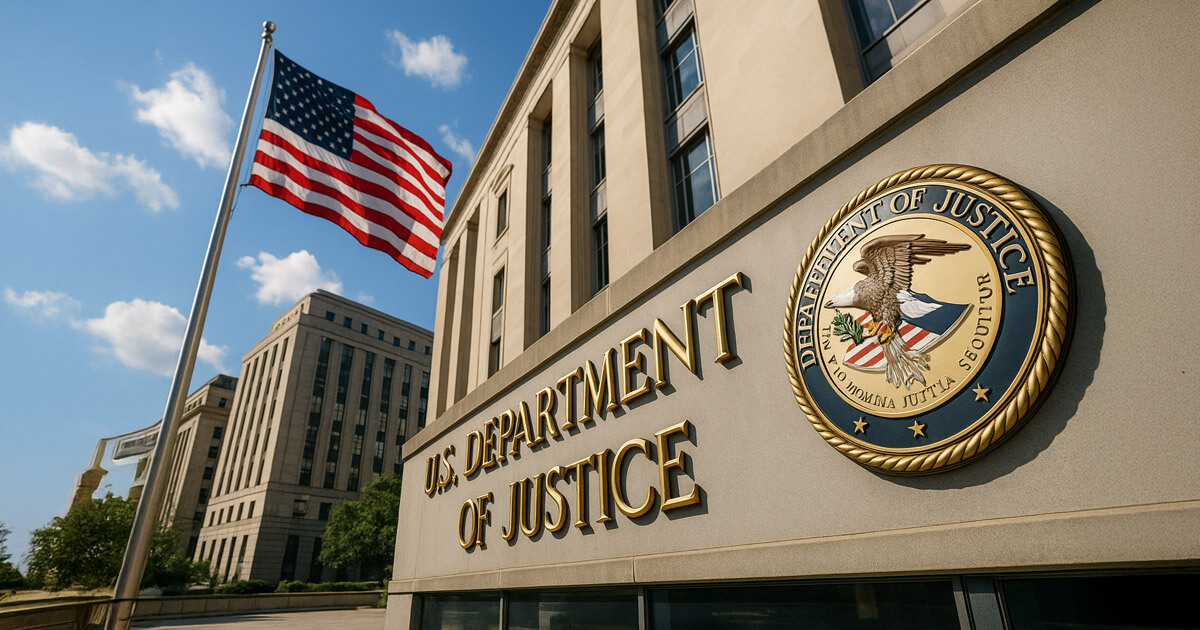
The Justice Department (DOJ) Criminal Division head, Matthew Galeotti, recently made a groundbreaking declaration that writing code without criminal intent does not constitute a crime. This announcement provides much-needed clarity for crypto developers and smart contract creators regarding their criminal liability.
In a speech at the American Innovation Project Summit on Aug. 21, Galeotti stated, “Our view is that merely writing code without ill intent is not a crime. Innovating new ways for the economy to store and transmit value and create wealth without ill intent is not a crime.”
This statement marks the DOJ’s most explicit guidance yet on developer responsibility within the digital asset ecosystem. Galeotti emphasized that developers contributing code to open source projects without specific criminal intent do not face liability for aiding and abetting violations. He explained that both aiding and abetting charges and conspiracy prosecutions require prosecutors to prove specific intent, setting a higher evidentiary standard for developer cases.
The guidance addresses industry concerns about holding smart contract developers criminally liable for operating unlicensed money transmitting businesses. Galeotti assured that developers who contribute code to open source projects without the intent to assist criminal conduct are not criminally liable.
Furthermore, the DOJ will not prosecute regulatory violations for unlicensed money transmission charges under 18 USC 1960 unless there is evidence that defendants knowingly and willfully violated specific legal requirements. Galeotti also provided protections for truly decentralized software that automates peer-to-peer transactions without third-party custody or control over user assets.
The guidance aims to distinguish between legitimate development and criminal conduct, ensuring that developers of neutral tools with no criminal intent are not held responsible for third-party misuse of their creations. Instead, prosecutors should target the misusing party rather than the well-intentioned creators.
Overall, the DOJ’s technology-neutral approach treats digital asset crimes similarly to traditional financial violations while safeguarding lawful innovation from regulatory overreach. This clarity from the Justice Department offers reassurance to crypto developers and smart contract creators, allowing them to innovate and create without fear of unwarranted criminal liability.