
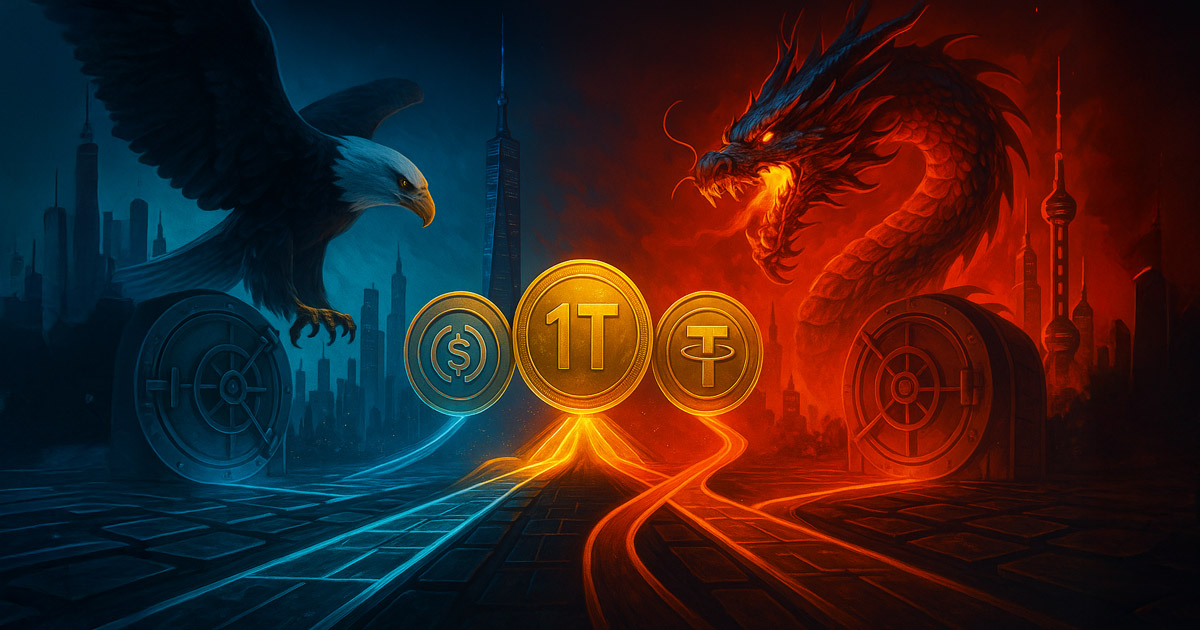
The race for dominance in on-chain payments is heating up as MetaMask’s mUSD, the European Union’s digital euro initiative, and Hong Kong’s AxCNH stablecoin compete for a share of the $2 to $4 trillion annual settlement market. With the potential for 1 to 2 percent of global cross-border payments to move to tokenized rails, the stakes are high for these three contenders.
The US dollar holds a significant advantage in the stablecoin space, with mUSD leveraging existing distribution channels like MetaMask and Stripe’s Bridge to reach users seamlessly. The recent passage of the GENIUS Act in the United States has provided a clear regulatory framework for fiat-referenced tokens, paving the way for payment companies to distribute stablecoins within existing networks.
In contrast, Europe is taking a different approach with the digital euro, aiming to reduce reliance on foreign card networks for retail payments. Legislation is in the works for early 2026, with policymakers addressing privacy, holding limits, and bank funding risk. The MiCA framework has already shaped the competitive landscape in the region.
Asia, on the other hand, is focusing on corridor strategies rather than global market share. AxCNH, an offshore yuan stablecoin launched in Hong Kong, is targeting Belt and Road settlement routes. Policy considerations and mainland China’s stance on tokenization will play a crucial role in the scaling of CNH tokens.
As the stablecoin market continues to evolve, market capitalization will be a key metric to track. While Tether’s USDT currently dominates the market, new entrants like mUSD are looking to capture a share of the growing market. The path to a $1 trillion market cap will require significant growth rates and a strong distribution network.
The implementation timelines for these stablecoin projects will also play a crucial role in their success. With legislation set to be enacted in the coming years, mass availability may not be realized until 2027 or 2028. The key operational questions for these projects include distribution, rulebooks, and corridor strategies.
In conclusion, the race for on-chain payments supremacy is in full swing, with mUSD, the digital euro, and AxCNH vying for a piece of the trillion-dollar settlement market. The coming years will be crucial in determining which stablecoin emerges as the leader in this rapidly evolving space.