
Tackling Child Labor in Ghana’s Cocoa Farms with Blockchain Technology
Ten-year-olds still swing machetes on Ghanaian cocoa farms that feed global chocolate giants. After decades of industry promises, over 1.5 million children work in conditions that would be illegal anywhere else.
A New Initiative to Combat Child Labor
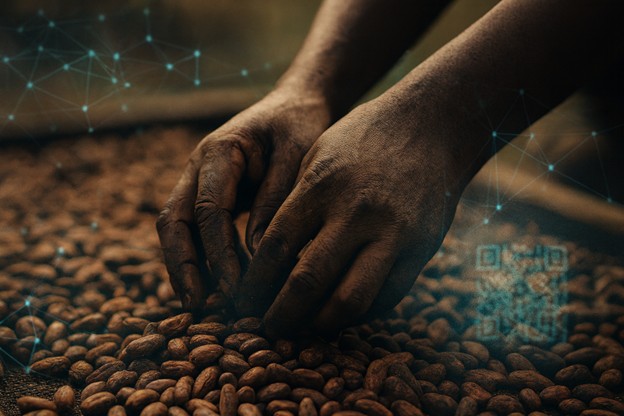
Swiss blockchain firm Fedrok AG and Ghanaian agribusiness FarmRight Ghana have joined forces to launch a groundbreaking pilot project aimed at eradicating child labor from cocoa and palm oil supply chains. This innovative initiative combines Fedrok’s “Proof-of-Green” blockchain technology with FarmRight’s established credibility among Ghanaian farmers to create a transparent, tamper-proof, and scalable system.
The initiative addresses a persistent issue in the cocoa industry, where child labor continues to be a prevalent problem despite numerous commitments from industry players. Ghana, a major cocoa producer accounting for approximately 20% of global cocoa, has been under scrutiny for the presence of young children working in hazardous conditions on supplier farms.
How It Works
Every employment contract is securely recorded on Fedrok’s blockchain. Independent audits are logged with digital signatures and timestamps, ensuring transparency and accountability. Anonymous community tips are stored to prevent them from being overlooked. Farms that demonstrate their commitment to eliminating child labor receive a blockchain-verified “seal,” granting them access to premium buyers willing to pay a premium for ethically sourced cocoa. This incentivized approach aims to make the initiative sustainable in the long run.
According to Randy Boaitey, founder of FarmRight Ghana, “It’s not enough to tell farmers to do better. We’re making sure that doing better actually pays.” The success of the initiative hinges on demonstrating a clear return on investment for farmers, including the initial technology costs for biometric scanners, training, and reliable internet connectivity in remote areas.
Regulatory Compliance and Industry Trends
The initiative comes at a crucial time as regulatory pressures mount on companies to ensure their supply chains are free from human rights abuses and environmental harm. The European Union’s upcoming Deforestation Regulation and Corporate Sustainability Due Diligence Directive will impose stringent requirements on companies, with hefty fines and market exclusion for those found guilty of child labor violations.
Fedrok’s blockchain infrastructure, optimized for high-frequency ESG data logging, integrates with existing certification systems and multiple compliance frameworks. The company’s “Proof-of-Green” consensus mechanism rewards blockchain activity powered by renewable energy, linking on-chain activities to measured environmental impact.
Global Impact and Future Expansion
Beyond Ghana, Fedrok is exploring partnerships in India, Papua New Guinea, and Madagascar to address environmental and social challenges through blockchain technology. The success of the pilot project in Ghana could pave the way for expansion to other cocoa-producing regions and crops affected by child labor.
If successful, the model has the potential to revolutionize supply chain transparency and ethical sourcing practices, offering a sustainable solution to a long-standing problem in the industry. By leveraging technology and economic incentives, the initiative aims to protect vulnerable children and create a more ethical cocoa industry.
As consumers become more conscious of the origins of their products, initiatives like this offer hope for a future where chocolate truly tastes sweeter, knowing it was produced without exploiting children.