
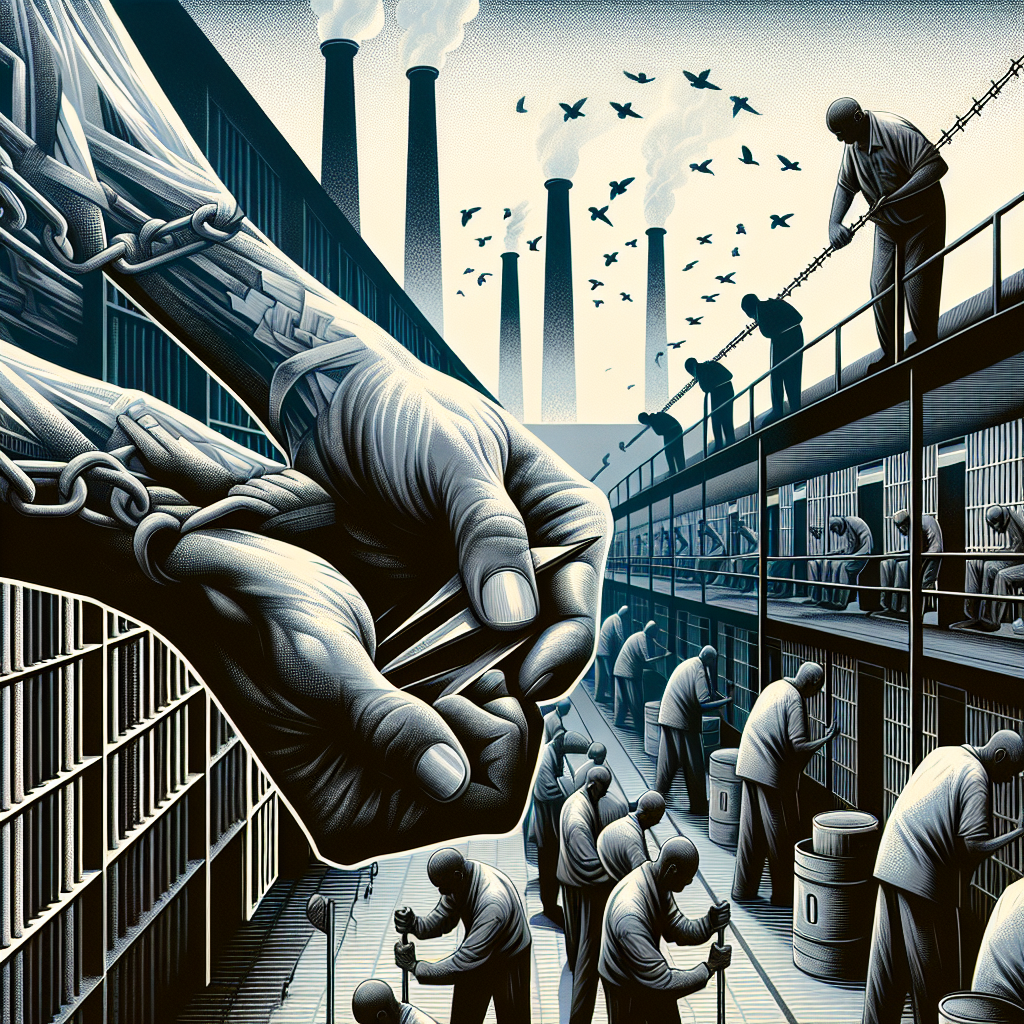
The United States is home to less than 5% of the world’s population, yet it holds nearly 25% of the world’s prison population. With over 1.2 million people currently serving time in state and federal prisons, the U.S. correctional system has long been criticized for its mass incarceration rates. But what the ITUC’s report brings into sharper focus is how that system is being monetized through what many call “prison slavery.”
The report outlines how incarcerated workers are often compelled to work in unsafe conditions, without proper training or labor rights, for shockingly low wages – sometimes as low as $0.13 an hour. In some states, prisoners aren’t paid at all. Refusing to work can result in punishments such as solitary confinement, loss of visitation rights, or denial of parole eligibility.
At the center of this issue lies a clause in the 13th Amendment of the U.S. Constitution. While the amendment abolished slavery in 1865, it included a significant exception: slavery and involuntary servitude are still legal as punishment for a crime.
This clause has paved the way for what critics describe as a legalized form of slavery inside America’s prisons – disproportionately affecting Black and brown communities. According to the Sentencing Project, Black Americans are incarcerated at nearly five times the rate of white Americans.
The ITUC’s findings suggest a complex web of beneficiaries – including private corporations, state governments, and correctional institutions. Prison labor is often used to manufacture everything from furniture to military equipment, and to provide services such as food preparation, laundry, and even customer service for government agencies.
Beyond the economics, the human cost of this system is enormous. Incarcerated individuals working in these conditions often lack basic labor protections: no right to unionize, no worker’s compensation if injured, and no pathway to upward mobility. These jobs rarely provide the kind of training or education that would help with rehabilitation or re-entry into society after release.
The ITUC is not alone in sounding the alarm. Human rights organizations, lawmakers, and advocacy groups have been pushing for reform – calling for the removal of the 13th Amendment’s exception clause and the implementation of fair labor standards within the prison system.
States like California and Colorado have already taken steps to address these issues. In 2020, Colorado voters approved a ballot measure that removed the exception for slavery from the state constitution. In California, a similar measure failed to pass in 2022, but the push continues.
Representative Nikema Williams of Georgia and Senator Jeff Merkley of Oregon have introduced federal legislation – the Abolition Amendment – which seeks to end the 13th Amendment loophole. While support is growing, the road to constitutional change remains steep and politically charged.
The ITUC’s report serves as a critical reminder that reforming America’s criminal justice system isn’t just about reducing prison populations – it’s also about protecting human rights within prison walls.
Ending exploitative prison labor will require more than just public outcry. It demands legislative action, corporate accountability, and a cultural shift in how we view incarceration. Rehabilitation, not exploitation, must be the cornerstone of any just and humane correctional system.
Until then, the voices of those inside – working against their will for next to nothing – will continue to echo the old abolitionist cry: “Am I not a man and a brother?” the perspective of a travel writer exploring the vibrant city of Barcelona, Spain.
Barcelona is a city that truly has it all – from stunning architecture and beautiful beaches to delicious food and a lively atmosphere. As a travel writer, I had the pleasure of exploring this vibrant city and experiencing everything it has to offer.
One of the first things that struck me about Barcelona was the incredible architecture. The city is home to some of the most famous buildings in the world, including the iconic Sagrada Familia designed by renowned architect Antoni Gaudí. The intricate details and unique design of this cathedral are truly awe-inspiring and a must-see for anyone visiting Barcelona.
In addition to the Sagrada Familia, Barcelona is also home to other architectural gems such as Casa Batlló and Park Güell, both also designed by Gaudí. These buildings showcase the city’s rich history and unique style, making them a favorite among tourists and locals alike.
After exploring the city’s architectural wonders, I couldn’t wait to sample some of Barcelona’s delicious cuisine. The city is known for its fresh seafood, tapas, and paella, all of which I had the pleasure of trying during my visit. From bustling markets to cozy cafes, Barcelona offers a wide array of dining options that cater to every taste and budget.
One of the highlights of my trip was visiting La Boqueria, a bustling market located off La Rambla. Here, I indulged in fresh fruit, cured meats, and seafood, all while soaking in the vibrant atmosphere of the market. I also made sure to visit some of Barcelona’s famous tapas bars, where I sampled a variety of small plates and enjoyed a glass of local wine.
Of course, no visit to Barcelona would be complete without spending some time at the beach. The city boasts several beautiful beaches, including Barceloneta Beach, which is just a short walk from the city center. Here, visitors can relax on the sandy shores, take a dip in the Mediterranean Sea, or enjoy a cocktail at one of the many beachside bars.
Overall, my time in Barcelona was nothing short of magical. From the stunning architecture to the delicious food and beautiful beaches, this city truly has something for everyone. Whether you’re a history buff, a foodie, or a beach bum, Barcelona is a destination that should be at the top of your travel bucket list.