
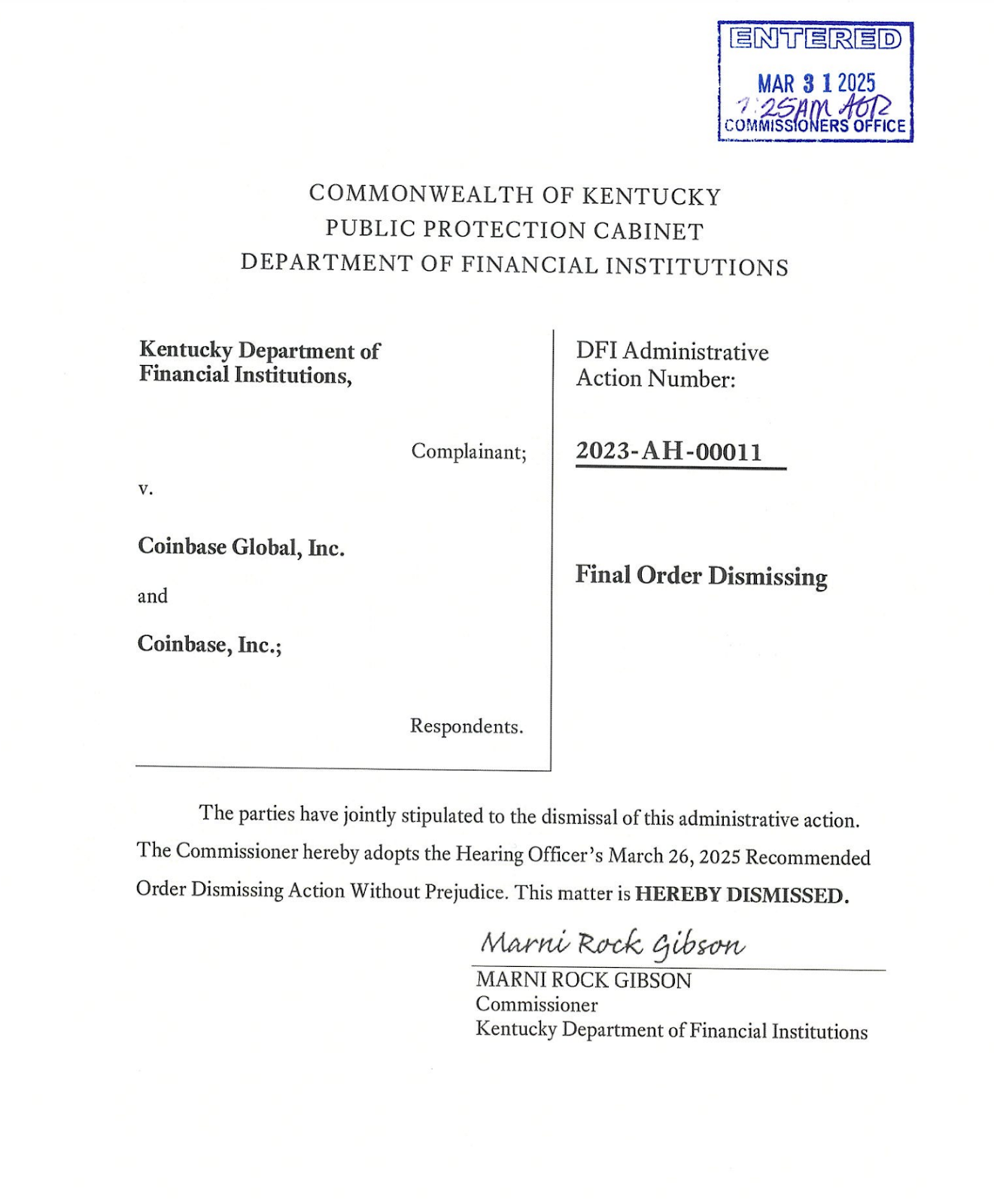
Kentucky’s recent decision to dismiss its lawsuit against Coinbase over the exchange’s staking services marks a significant shift in the state’s approach to crypto regulation. This move aligns with a broader trend of states opting for legislative clarity rather than punitive actions against crypto firms.
Following in the footsteps of Vermont and South Carolina, Kentucky’s Department of Financial Institutions filed a joint stipulation of dismissal on March 31, ending its case against Coinbase for offering unregistered securities through its staking program. This decision comes after the U.S. Securities and Exchange Commission (SEC) dropped its federal case against Coinbase in February.
Coinbase’s Chief Legal Officer, Paul Grewal, responded to Kentucky’s move on social media, advocating for a unified federal market structure for crypto. He highlighted bipartisan agreement within Kentucky that staking and mining should not be classified as securities.
While Kentucky, Vermont, and South Carolina have reversed their stance, seven other states still have pending legal actions against Coinbase. However, Kentucky’s dismissal of the lawsuit is in line with its recent legislative efforts to promote pro-crypto policies.
Just days before dropping the lawsuit, Governor Andy Beshear signed House Bill 701, also known as the “Bitcoin Rights” bill, into law. This bill, which passed unanimously in both the House and Senate, provides significant protections for crypto users and businesses in the state.
Among its key provisions, HB701 enshrines the right for individuals to self-custody digital assets, run blockchain nodes, and conduct transactions without the threat of discriminatory regulation. Additionally, the bill shields mining operations from restrictive zoning laws and prevents crypto staking from being classified as a securities offering.
Kentucky is also considering another bill that would allow the State Investment Commission to allocate up to 10% of the state’s excess reserves into Bitcoin and other digital assets. This move would position Kentucky alongside states like Oklahoma, Missouri, and Arizona, which are exploring similar crypto investment strategies.
The dismissal of the lawsuit and the passage of the Bitcoin Rights bill in Kentucky reflect a larger trend in how states approach crypto regulation. As more states consider integrating Bitcoin into their financial strategies, the legal battles against Coinbase and similar companies may continue to weaken in favor of clearer, more structured crypto regulations at both state and federal levels.