
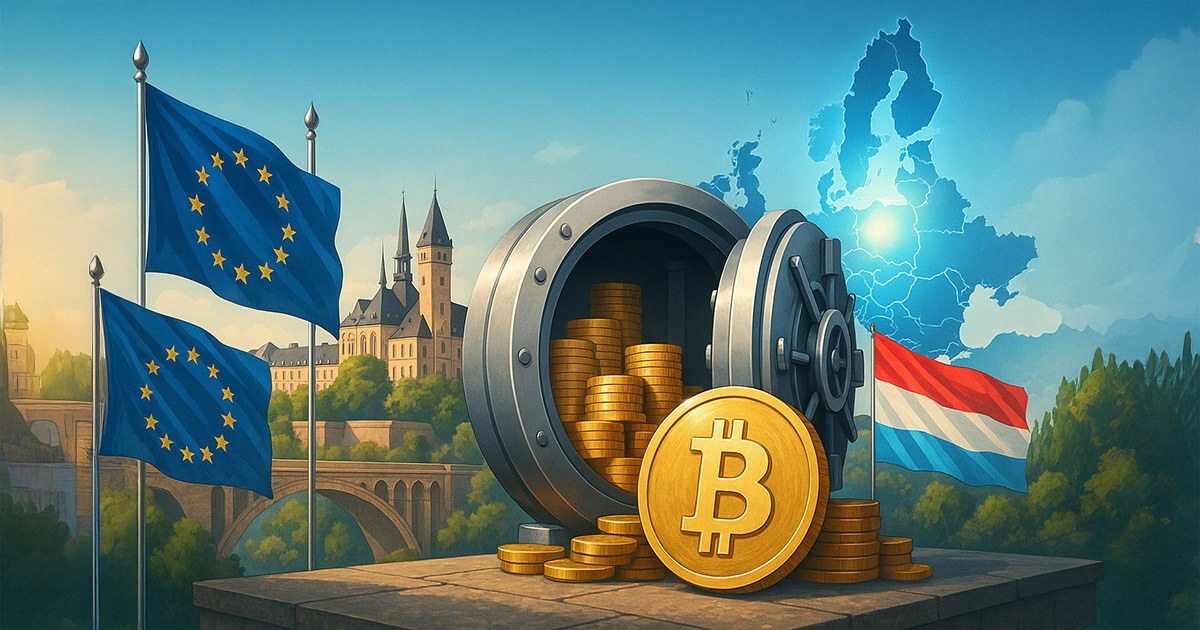
Luxembourg Makes Historic Investment in Bitcoin
Luxembourg has made history by becoming the first country in the Eurozone to invest in Bitcoin through its sovereign wealth fund. Finance Minister Gilles Roth announced during the national budget presentation that 1% of the $730 million Intergenerational Sovereign Wealth Fund (FSIL) would be allocated to Bitcoin exchange-traded funds (ETFs).
This significant investment reflects a strategic shift in the nation’s financial strategy towards diversified, innovation-driven asset management. The decision to invest in Bitcoin aligns with the FSIL’s revised framework approved in July 2025, which now allows up to 15% of its portfolio to be allocated to alternative assets, including cryptocurrencies.
Jonathan Westhead, head of communications at the Luxembourg Finance Agency, emphasized that the 1% allocation demonstrates the country’s confidence in the growing maturity of digital assets. He stated that the move sends a clear message about Bitcoin’s role in the future of finance and was designed to mitigate risks while ensuring regulatory compliance under Luxembourg’s investment law.
The FSIL, established in 2014 to safeguard national wealth for future generations, has traditionally focused on high-quality bonds and conservative assets. However, the July policy amendment marked a significant shift, expanding the fund’s scope to include higher-yield, risk-adjusted investments that reflect global financial innovation.
Luxembourg’s decision to invest in Bitcoin sets it apart as the first EU nation to make a deliberate, policy-backed investment in the cryptocurrency. While some European countries hold seized Bitcoin, Luxembourg’s approach is strategic and planned.
The move comes amidst a broader wave of institutional adoption of Bitcoin ETFs globally. In the US, spot Bitcoin ETFs manage approximately $168 billion in net assets, representing a significant portion of Bitcoin’s total market capitalization. Sovereign entities like the Wisconsin Investment Board and Abu Dhabi’s Mubadala Investment Company have also disclosed substantial holdings in Bitcoin ETFs.
Luxembourg’s regulatory environment has played a crucial role in facilitating this historic investment. The country’s financial regulator, the Commission de Surveillance du Secteur Financier (CSSF), issued updated guidelines in July allowing virtual assets in alternative investment funds, laying the groundwork for the FSIL’s new investment mandate.
In conclusion, Luxembourg’s decision to invest in Bitcoin through its sovereign wealth fund marks a significant milestone in the cryptocurrency’s institutional adoption. With other countries around the world also exploring similar investment opportunities, Bitcoin’s role in traditional finance continues to evolve and expand.