
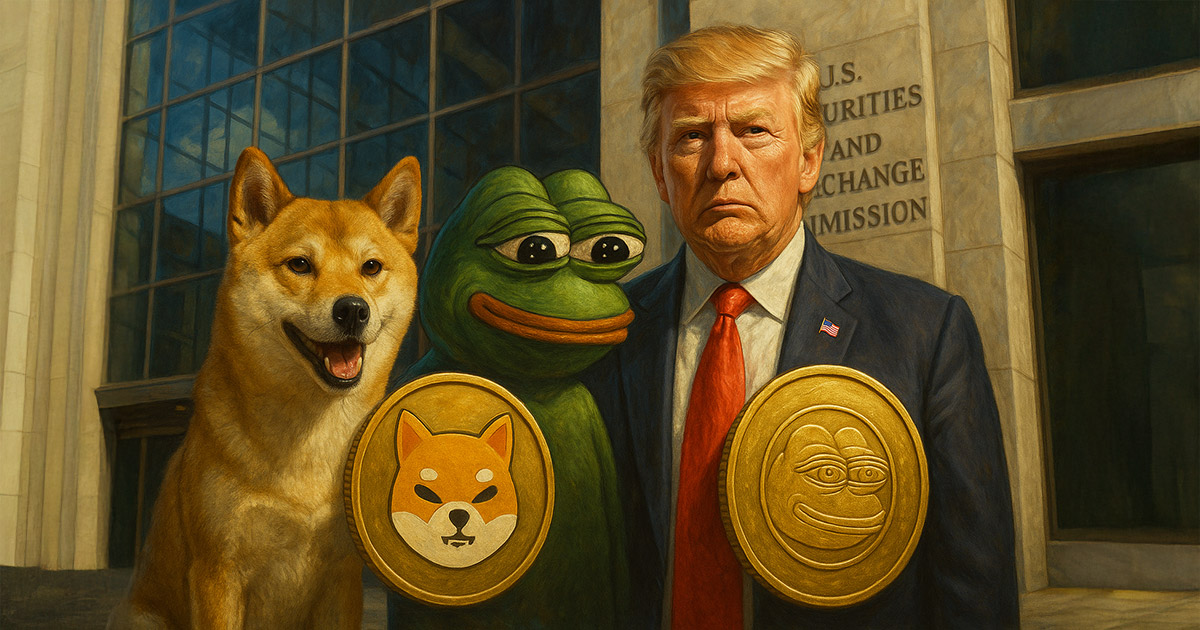
Memecoin investors should be aware that they cannot rely on the U.S. Securities and Exchange Commission (SEC) for protection if they suffer losses, as Commissioner Hester Peirce made clear in a recent interview with CNBC. Peirce, who was appointed by President Donald Trump in 2018 and leads the SEC’s Crypto Task Force, emphasized that investors should not expect the SEC to intervene in memecoin investments.
Peirce reiterated her previous statements from February, where she stated that most memecoins do not fall under the SEC’s regulatory framework. She pointed out that the SEC does not consider memecoins to be securities, suggesting that the U.S. Commodity Futures Trading Commission (CFTC) might be better suited to regulate these assets. Peirce highlighted the need for clear legislative guidelines to define the SEC’s regulatory scope in the cryptocurrency space.
During her interview at Bitcoin 2025, Peirce noted that while it is possible to structure almost anything as a securities transaction, memecoins typically do not meet the criteria. She cautioned investors that they should not expect SEC protection when investing in memecoins, as these assets fall outside the regulatory purview of the SEC.
Peirce drew parallels between the growing interest in memecoins, which lack intrinsic value, and the hype surrounding non-fungible tokens (NFTs). Like memecoins, many NFTs experienced a significant drop in value after the initial frenzy subsided. This sentiment was echoed by David Sacks, the White House crypto czar, who suggested treating memecoins as collectibles.
One notable example is the Official Trump memecoin, which saw a surge in market capitalization to $30 billion before Trump’s inauguration, only to plummet shortly after. Small investors reportedly lost $2 billion when the $TRUMP price crashed, while insiders and entities linked to Trump profited from trading fees and early investments in the memecoin.
Concerns have been raised about potential conflicts of interest as Trump’s ties to the crypto world deepen. The controversial gala dinner hosted by Trump for the top holders of his memecoin sparked controversy, with lawmakers questioning whether it was a means for foreign entities to gain access to Trump. The White House has denied any allegations of conflict of interest.
Peirce’s remarks serve as a stark reminder that investors in memecoins are essentially on their own, as the SEC has distanced itself from regulating these assets. With memecoins increasingly being used in scams and rug-pulls, investors must exercise caution and conduct thorough research before venturing into this volatile market.