
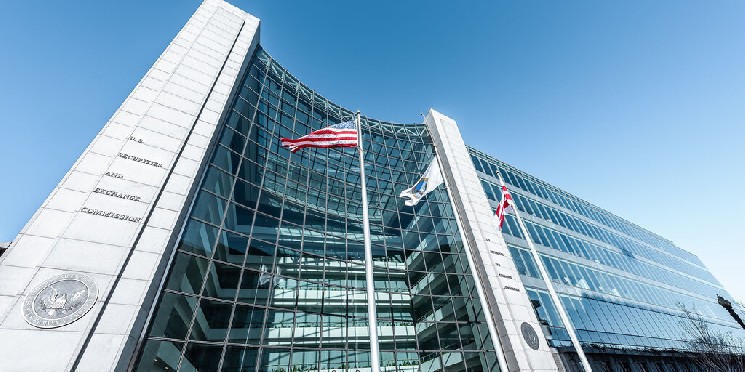
The House Financial Services Committee recently unveiled a new discussion draft of its proposed crypto market structure legislation, which could have significant implications for the regulation of digital assets in the United States. The current version of the bill includes provisions that would amend existing securities laws to exempt many top cryptocurrencies from oversight by the Securities and Exchange Commission (SEC).
Under the proposed legislation, digital assets that meet the criteria of “digital commodities” would be excluded from the definition of a security and therefore not subject to SEC regulation. The bill defines digital commodities as assets that are generated by a blockchain system, derive their value from the system, offer voting rights in a decentralized governance system, or are used to validate transactions on a blockchain.
Furthermore, the bill specifies that secondary market trading of these digital commodities would also be exempt from SEC regulation, provided that the assets are certified by the SEC as originating from a “mature blockchain system.” A mature blockchain system is described as a network that allows users to execute transactions, access services, operate nodes, or validate transactions in a decentralized and secure manner.
However, exemptions for secondary transactions related to digital commodities issued by mature blockchain systems would not apply to transactions involving ownership interests in the revenues, profits, or assets of the issuer. Institutional offerings would still be subject to SEC regulation under the proposed legislation.
Popular cryptocurrencies like Ethereum, Solana, XRP, BNB, and Cardano are likely to fall under the definition of digital commodities, along with their respective blockchain networks. These assets would be overseen by the Commodity Futures Trading Commission (CFTC) rather than the SEC.
There are some uncertainties regarding certain tokens, such as XRP, which was developed by Ripple, a company that controls a significant portion of the token’s supply. The bill’s ownership restrictions may impact the eligibility of XRP for exemption from securities laws, especially considering Ripple’s holdings.
Tokens issued prior to the passage of the legislation, like XRP, could potentially be exempted by the SEC on a case-by-case basis if they meet some of the criteria outlined for mature blockchain systems. The House Financial Services Committee is expected to discuss these issues in an upcoming meeting, which may become contentious due to disagreements between Democrats and Republicans over certain provisions in the bill.
As the debate unfolds, it will be crucial to monitor how these proposed changes could impact the regulatory landscape for cryptocurrencies in the US. Stay tuned for updates on this evolving story.