

A recent report sheds light on on-chain data and leaked messages from A7, a company specializing in sanctions evasion. Shockingly, it appears that the firm meddled in Moldovan elections to benefit Russia.
The leaked information does not provide a direct link between the Kremlin and A7, but it does reveal funds being used for polling, activist networks, and political figures. It is hard to believe that the government is unaware of or uninvolved in these activities.
Is Russia Influencing Moldovan Elections?
A7 has gained notoriety in the cryptocurrency world for its ruble-backed stablecoin, which has been utilized for evading sanctions.
However, fresh leaks paint a darker picture of the company, suggesting it may be a key player in Russian interference in elections across Eastern Europe.
While allegations of Russian interference in US elections sparked widespread concern, the focus has now shifted towards Moldova, with concrete on-chain evidence being presented.
Prior warnings about organized electoral corruption in Moldova now seem to point directly at A7, which appears to be at the heart of a coordinated effort.
The firm’s stablecoin was prominently featured on Garantex, an exchange that was shut down due to sanctions violations. The A7A5 token has since re-emerged on various platforms, including those associated with criminal activities.
A7’s specialization in cross-border sanctions evasion has proven to be a profitable venture. Data from blockchain transactions illustrates the scope of their operations:
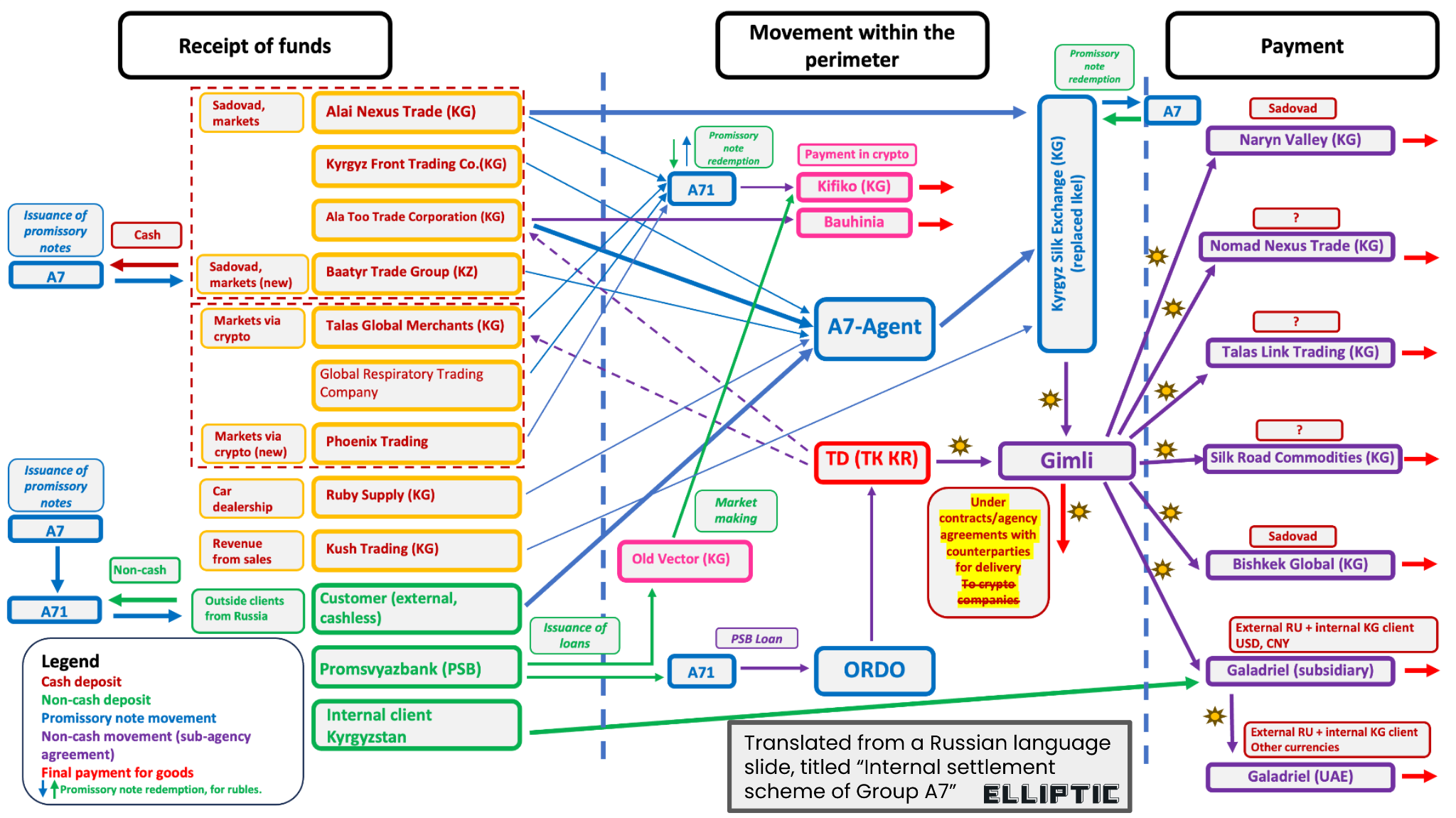
A7 On-Chain Sanctions Evasion. Source: Elliptic
With this background in illicit financial activities, it seems that transitioning to election interference was a natural progression. The evidence suggests that A7 wallets were used to make direct payments to Moldovan politicians.
An Covert Network
Notably, Ilan Shor, who was sanctioned by the US for his alleged involvement in aiding Russian interference in Moldovan elections, clandestinely transferred millions to a former elected official in the country. Corresponding leaked messages corroborate this transaction.
This incident is just one example of the extensive Russian election meddling. Leaked conversations and blockchain data reveal a systematic use of USDT to finance activist groups, conduct polling operations, and more. Additionally, A7 purportedly utilized Toncoin for targeted payments.
While the leaks hint at possible intelligence ties, there is no concrete evidence indicating direct involvement of the Russian government in Moldovan election interference. However, given the secretive nature of these operations, definitive proof may be challenging to obtain.
At this juncture, it is clear that individuals in Russia are leveraging cryptocurrency payments to influence Moldova’s electoral process. It is highly improbable that A7 is acting independently without the knowledge of the Russian authorities.
The original article was published on BeInCrypto and this revised version aims to provide a unique perspective on the issue.