
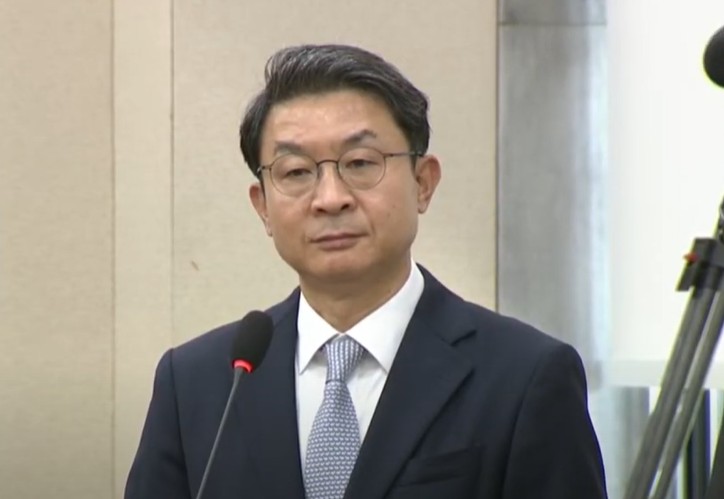
South Korean lawmakers have raised concerns about Lee Eok-won, the nominee for chairman at the Financial Services Commission, for his investment in shares of the Bitcoin-focused US company Strategy. During a National Assembly confirmation hearing on September 2, Lee Eok-won defended his actions, stating that he had only invested in blue-chip US stocks to gauge investor sentiment.
The Financial Services Commission (FSC) plays a pivotal role in shaping the country’s crypto regulations, despite President Lee Jae-myung’s previous calls to abolish the commission. However, recent developments suggest that the President may have shifted his stance on the FSC’s future.
Criticism has arisen from lawmakers and media outlets regarding Lee Eok-won’s extensive portfolio of overseas shares, including stocks in companies like NVIDIA and Tesla. This has raised eyebrows among critics who argue that his investment choices contradict the President’s efforts to revitalize the domestic stock market.
The main opposition party, People Power Party, has denounced the nomination of Lee Eok-won as FSC chairman, labeling it as inappropriate given his holdings in firms like Strategy, a prominent Bitcoin treasury company. Lawmakers question his focus on US stocks instead of supporting the domestic market, especially amidst initiatives like the KOSPI 5,000 committee aimed at boosting the local market’s value.
In response to criticism, Lee Eok-won defended his investment decisions, stating that he sought to gain market experience and understand investor sentiment. However, his comments dismissing the intrinsic value of cryptocurrencies and downplaying the potential for government and pension funds to hold strategic Bitcoin reserves have drawn ire from crypto advocates.
Critics argue that Lee Eok-won’s views on cryptoassets are outdated and fail to acknowledge the growing adoption of cryptocurrencies by global corporations. They highlight the digital utility of assets like Bitcoin, emphasizing their security and transferability in modern financial landscapes.
Despite facing backlash, Lee Eok-won remained non-committal on the possibility of the FSC approving a Bitcoin ETF, stating that the commission would assess global regulatory trends and engage with the National Assembly on the matter.
Overall, Lee Eok-won’s nomination as FSC chairman has sparked controversy due to his investment choices and remarks on cryptocurrencies. As the top financial regulator in South Korea, his actions and statements will be closely scrutinized in the coming days. As we all know, the world is facing a crisis like never before with the ongoing COVID-19 pandemic. The virus, which originated in Wuhan, China, has spread rapidly across the globe, causing widespread illness, death, and economic devastation. Governments worldwide have implemented various measures to slow the spread of the virus, including lockdowns, social distancing, and mandatory mask-wearing.
One of the most effective tools in combating the spread of COVID-19 is vaccination. Vaccines have been developed at an unprecedented pace, with several different vaccines now available for use. These vaccines have been shown to be highly effective at preventing severe illness and death from the virus. However, despite the availability of vaccines, there are still many people who are hesitant to get vaccinated.
Vaccine hesitancy is not a new phenomenon, but it has been particularly prevalent during the COVID-19 pandemic. There are many reasons why people may be hesitant to get vaccinated, including concerns about the safety and efficacy of the vaccines, mistrust of the government or pharmaceutical companies, and misinformation spread on social media.
It is important to address these concerns and provide accurate information about the vaccines. The COVID-19 vaccines have undergone rigorous testing and have been shown to be safe and effective. They have been approved for emergency use by regulatory agencies such as the FDA and have been given to millions of people around the world with minimal side effects.
In addition to providing accurate information, it is also important to address the underlying reasons for vaccine hesitancy. Many people may be hesitant to get vaccinated due to a lack of access to healthcare, language barriers, or distrust of the medical system. It is important to address these barriers and ensure that everyone has access to the vaccines.
Public health officials and healthcare providers play a crucial role in addressing vaccine hesitancy. They can provide information about the vaccines, address concerns, and encourage people to get vaccinated. Community outreach programs can also be effective in reaching underserved populations and addressing barriers to vaccination.
Ultimately, getting vaccinated is not just a personal choice, but a collective responsibility. By getting vaccinated, we can protect ourselves, our loved ones, and our communities from COVID-19. It is important for everyone to do their part in ending the pandemic and getting back to some sense of normalcy. So let’s all do our part and get vaccinated.