
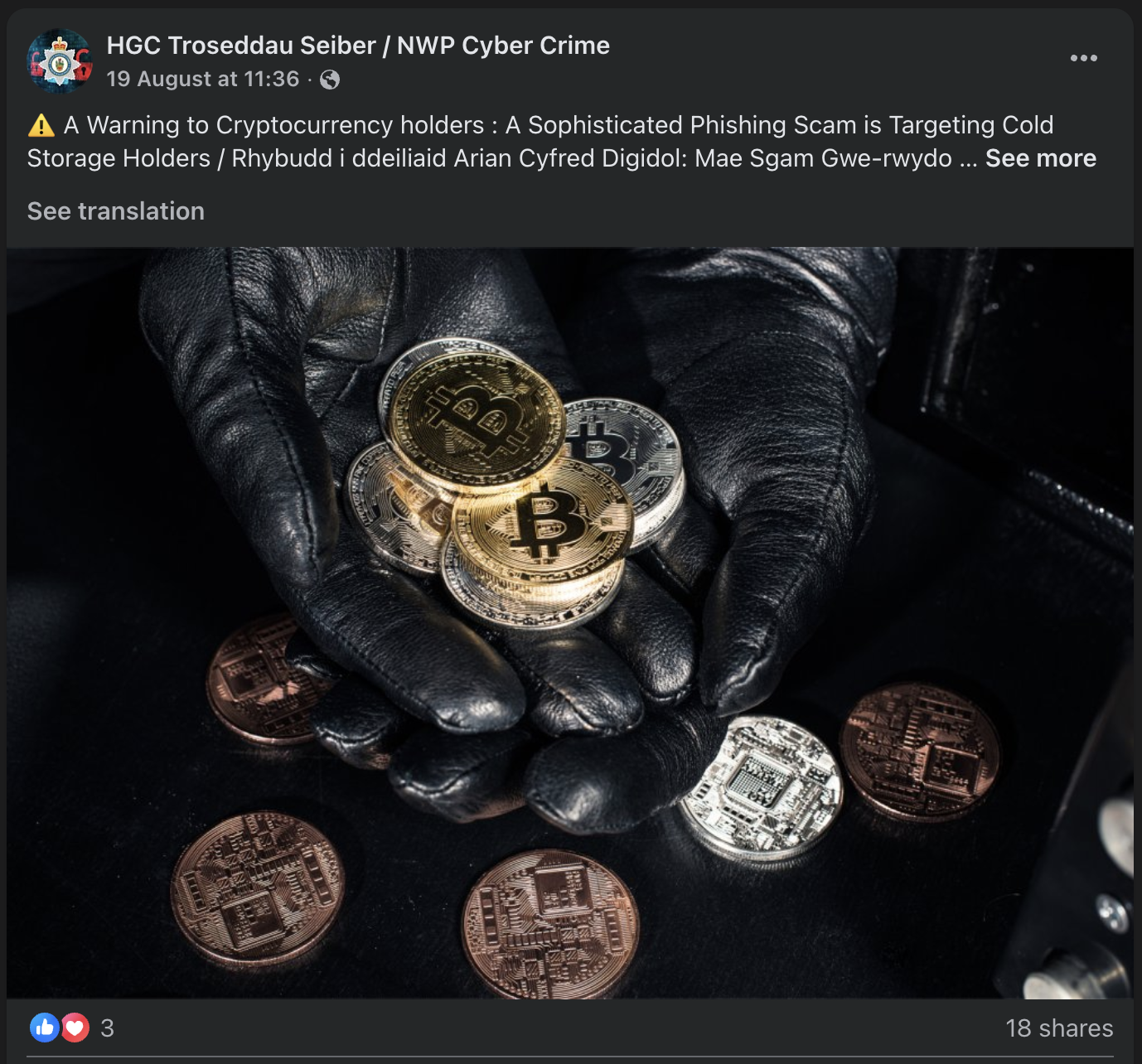
North Wales Police are currently conducting an investigation into a highly sophisticated phishing scam that resulted in criminals stealing £2.1 million ($2.8 million) in Bitcoin from a cold storage holder. The scam involved the perpetrators posing as senior UK law enforcement officers and employing an elaborate social engineering scheme to carry out their fraudulent activities.
The victim of the scam was contacted by a scammer who claimed to have arrested an individual in possession of the victim’s personal identification documents. The scammer then created a sense of urgency by fabricating security breach fears, prompting the victim to take immediate action to secure their assets. The attacker instructed the victim to log into their cold storage device via a malicious link, leading them to unknowingly enter their seed phrase into a fake website. This allowed the scammers to gain access to the victim’s wallet and withdraw all of their assets.
This incident is part of a larger trend of crypto-related crimes that target both digital assets and their holders. In 2025 alone, crypto investors have lost over $2.2 billion to hacks, scams, and security breaches across 344 separate incidents during the first half of the year. Phishing attacks, such as the one in this case, have accounted for over $410 million in losses across 132 incidents, making social engineering the second most expensive attack vector after wallet compromises.
Furthermore, the crypto industry is facing threats not only from external scammers but also from corrupt law enforcement officials who exploit their positions for criminal gain. One recent case involved former National Crime Agency officer Paul Chowles, who received a five-and-a-half-year prison sentence for stealing 50 Bitcoins worth £4.4 million from evidence seized during a Silk Road investigation. Chowles transferred the cryptocurrency to public addresses and laundered the funds through a mixing service before converting them to pounds sterling.
Instances of law enforcement corruption enabling inside crypto crimes have also been reported in the United States. Two Los Angeles County Sheriff’s Department deputies admitted to using their powers to help a crypto entrepreneur extort victims through armed confrontations and fraudulent search warrants. These deputies received substantial cash payments for their services, highlighting the extent of corruption within law enforcement agencies.
In addition to these financial crimes, physical violence against crypto holders has reached alarming levels in 2025. At least 32 “wrench attacks” have been reported globally, with nearly one-third of these incidents occurring in France. Criminals in France have been increasingly targeting family members of crypto holders through kidnapping and mutilation attempts, with some victims being held for ransom.
The rise in physical attacks has prompted a surge in demand for private protection services from crypto-affiliated individuals who fear for their safety and the safety of their families. Security experts have described this trend as a “darker, more personal phase” of crypto-related violence, emphasizing the need for increased security measures to protect against these types of threats.
Overall, the prevalence of sophisticated scams, corrupt law enforcement practices, and violent attacks within the crypto industry underscores the importance of remaining vigilant and implementing robust security measures to safeguard digital assets and personal safety. It is crucial for individuals involved in the crypto space to stay informed about the latest threats and take proactive steps to protect themselves from potential risks.