
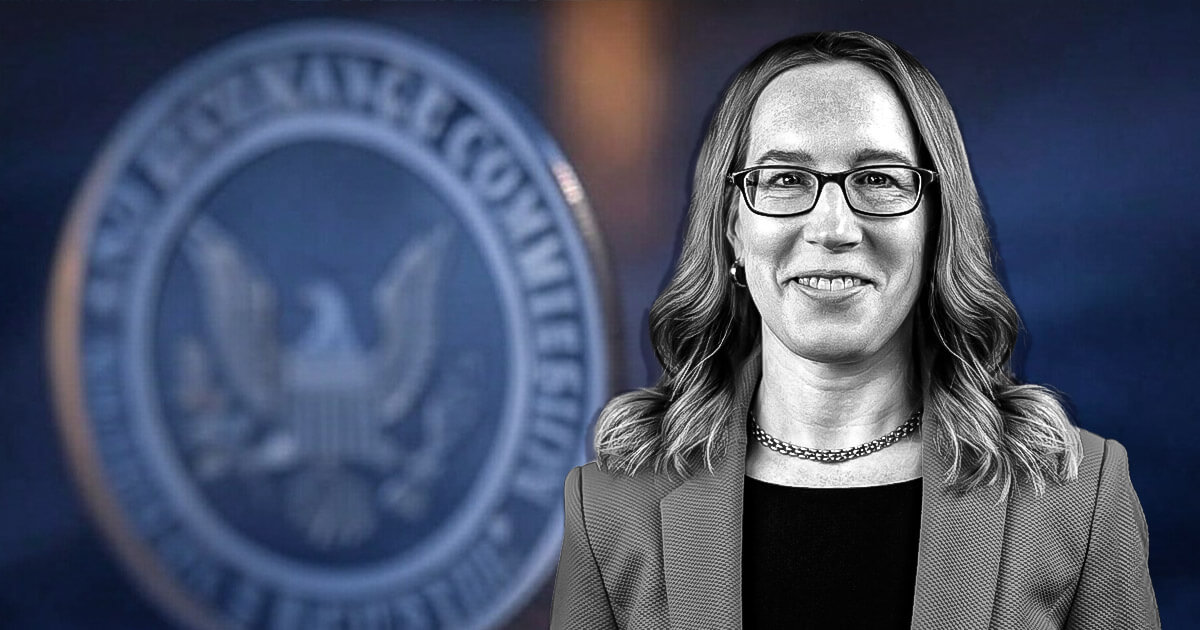
Hester Peirce, head of the US Securities and Exchange Commission’s (SEC) Crypto Task Force, recently made a statement regarding the tokenization of securities on a blockchain. She emphasized that while putting securities on a blockchain can provide certain benefits, it does not fundamentally change the nature of the underlying asset.
Peirce highlighted the importance of adhering to existing federal laws when creating, selling, or transferring tokenized shares, notes, or entitlements. She pointed out that tokenization can be done in two ways: an issuer can mint blockchain versions of its own shares, or a custodian can wrap third-party securities and issue receipts. However, she warned that the latter introduces counterparty risk as token holders rely on the custodian’s solvency and control of the underlying shares.
Peirce also emphasized the need for distributors to consult the SEC’s Division of Corporation Finance’s staff statement on disclosure duties and to meet with agency staff early if they are seeking bespoke exemptions. She noted that specific token formats may be classified as “receipts for a security” or “security-based swaps” depending on their characteristics.
The SEC Commissioner’s remarks come at a time when tokenized equity volumes are on the rise. Solana-based stock tokens issued under Backed Finance’s xStocks framework recently reached a combined market value of over $50 million. These tokens are now being listed on other venues, such as BNB Chain, in partnership with Kraken and Backed, allowing for 24-hour access and DeFi composability.
Market participants have largely welcomed the clarity provided by Peirce’s statement. Backed Finance co-founder Adam Levi stated that xStocks was designed to mirror traditional equity custody to ensure straightforward regulatory treatment. Kraken announced that DeFi integrations on BNB Chain will allow users to post tokenized stocks as collateral without affecting their securities status.
In addition, Bitget has integrated xStocks into its on-chain platform, enabling customers to trade the same tokens from their spot accounts without the need for separate wallets. Peirce concluded by expressing a willingness to work with market participants to craft appropriate exemptions and modernize rules where technology exposes gaps.
Overall, Peirce’s comments shed light on the regulatory considerations surrounding the tokenization of securities on a blockchain and highlight the need for market participants to comply with existing laws and regulations.