
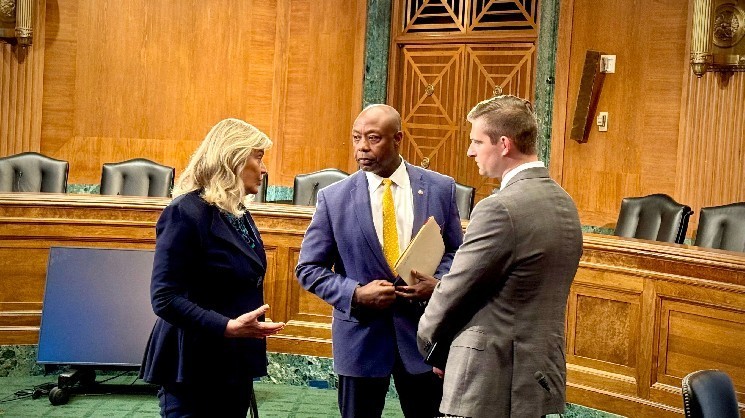
The U.S. Senate is making progress in its efforts to regulate the crypto market, with a new discussion draft of a market structure bill that provides more clarity on the frameworks being considered.
The 35-page draft, released on Tuesday, includes new definitions for digital assets that are not considered securities. It instructs the Securities and Exchange Commission (SEC) to create rules that would exempt these assets and their issuers from current regulations. Additionally, the bill calls for joint rulemaking between the SEC and the Commodity Futures Trading Commission (CFTC) on certain aspects of crypto market activity, such as portfolio margining.
This draft builds on principles introduced by the Senate Banking Committee last month, with Chairman Tim Scott stating that it will serve as an important foundation for the bill. The focus of the draft is primarily on the SEC, directing the commission to create rules around ancillary assets and disclosure requirements.
One key aspect of the draft is the definition of an “ancillary asset,” which is described as a digital asset sold in connection with the purchase and sale of a security but does not grant any financial rights to its owner. This definition sets the Senate bill apart from the House’s Clarity Act, which does not include a similar definition.
The bill also allows issuers to self-certify that their ancillary assets do not resemble securities. However, the SEC has the authority to reject the self-certification within 60 days if it determines that the asset does indeed resemble a security.
Senator Cynthia Lummis, who leads the digital assets subcommittee, emphasized the importance of the market structure legislation in establishing clear distinctions between digital asset securities and commodities. She believes that modernizing the regulatory framework will position the United States as a leader in digital asset innovation.
In addition to releasing the draft, lawmakers have posed several questions to the public for feedback. They are seeking input on various aspects of the bill, including the definition of ancillary assets, disclosure requirements for issuers, and the treatment of intermediaries. Responses are due by August 5, giving industry participants and others two weeks to provide their input.
Overall, the Senate’s efforts to regulate the crypto market are aimed at protecting investors, fostering innovation, and positioning the U.S. as a global leader in digital asset innovation. With input from stakeholders and the public, lawmakers hope to create a comprehensive and bipartisan regulatory framework for digital assets.