
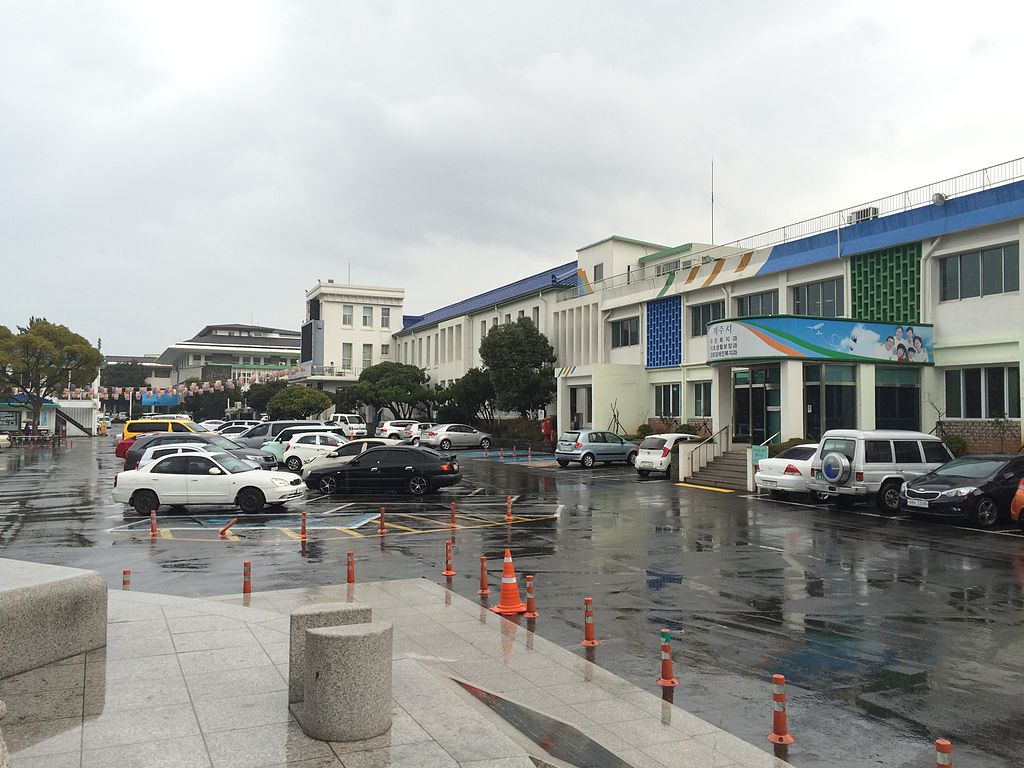
Jeju City, located on the picturesque South Korean island province of Jeju, recently made headlines with its crypto-themed investigation targeting tax evaders. The city’s tax officials embarked on a comprehensive probe to identify individuals with unpaid tax bills who were suspected of holding cryptoassets. The investigation, which involved nearly 3,000 residents, resulted in the seizure of Bitcoin and other digital coins from dozens of individuals.
According to a report by South Korean media outlet Newsis, tax delinquents in Jeju City were found to have been enriching themselves with cryptoassets. The city’s tax authorities announced on August 16 that they had successfully completed the investigation, which aimed to ascertain whether 2,962 individuals in the city possessed cryptocurrency holdings. Under South Korean law, national and local tax authorities have the power to request data from domestic crypto exchanges to identify customers suspected of tax evasion.
The individuals targeted in the investigation were all found to owe the city more than 1 million won (approximately $719) in unpaid tax levies and fines. Collectively, their outstanding tax bills amounted to a staggering 19.7 billion won (approximately $14,171,845) in arrears. The investigation involved a meticulous analysis of data provided by the country’s four largest crypto exchanges: Bithumb, Upbit, Coinone, and Korbit.
Among the individuals scrutinized, 49 were found to hold cryptoassets in wallets on the exchanges, with a total value of 230 million won (approximately $165,458). In response, Jeju City exercised its authority to designate the exchanges as third-party debtors and initiated procedures to freeze and seize the assets of these individuals. It is likely that the city will present the tax evaders with an ultimatum, requiring them to settle their bills promptly or face the liquidation of their seized coins.
In a bid to enhance its efforts to combat tax evasion and uncover hidden assets such as cryptoassets, Jeju City utilized AI-powered tools during the investigation. Tax chief Hwang Tae-hoon emphasized the city’s commitment to leveraging technology to identify high-value tax delinquents and boost tax revenues. He stated, “We will continue to bolster our response to tax evasion to uncover hidden assets like crypto. We will do our best to track down assets belonging to high-value tax delinquents. We will use AI-based information analysis to boost tax revenues and foster a culture of honest tax payment.”
This crackdown on tax evaders is not unique to Jeju City, as similar initiatives have been undertaken in other regions of South Korea. In Seoul’s affluent Gangnam District, tax officials have successfully recouped over $144,000 in unpaid taxes so far this year. These efforts underscore the government’s commitment to enforcing tax compliance and ensuring that all individuals fulfill their financial obligations.
The recent crypto-themed investigation in Jeju City serves as a reminder to taxpayers of the importance of transparent and honest tax payment. By leveraging technology and collaboration with crypto exchanges, tax authorities are equipped to identify and address instances of tax evasion effectively. As the city continues to crack down on tax evaders and seize cryptoassets, it sends a clear message that non-compliance will not be tolerated.