
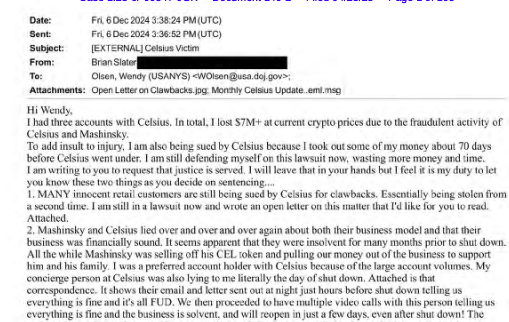
Federal prosecutors have gathered over 200 victim impact statements to present to a Manhattan federal court in the case of Alex Mashinsky, the founder of Celsius Network. These statements, totaling more than 400 pages, paint a vivid picture of the financial devastation and emotional turmoil experienced by Celsius customers who believed in the platform’s false promises of security.
One victim, Brian Salter, shared his story of losing over $7 million across three Celsius accounts. Despite his significant losses, he now faces a lawsuit from Celsius for withdrawing funds before the platform’s collapse, a move the company refers to as a “clawback.” Salter expressed frustration and disbelief at having to defend himself in this lawsuit, highlighting the ongoing struggles faced by many Celsius victims.
Many of these victims were reassured by Mashinsky and other company representatives that their assets were safe and that the platform was financially sound. However, when Celsius froze withdrawals in 2022, users were left stranded, with some individuals having a substantial portion of their net worth tied up in the platform.
In a rare move, Mashinsky accepted a plea deal after being charged with fraud by the Justice Department. He admitted to commodities and securities fraud, crimes that carry a maximum sentence of 30 years if served consecutively. This admission marked a significant shift in accountability within the crypto sector, as Mashinsky took personal responsibility rather than hiding behind corporate bankruptcies.
Following the collapse of Celsius, the Justice Department is considering new rules to prevent unfair payouts in crypto bankruptcies. The current system often leaves creditors compensated in fiat based on the value of crypto at the time of bankruptcy, which can be significantly lower than current market rates. These potential reforms could lead to a major update to U.S. bankruptcy laws as they relate to crypto, setting a precedent for future enforcement actions and investor protections.
The aftermath of Celsius’ collapse has prompted a reevaluation of how victims of digital asset bankruptcies are treated, with a focus on ensuring fair outcomes for those affected. As the crypto industry continues to evolve, it is crucial to establish clear regulations and protections to safeguard investors and prevent similar incidents from occurring in the future.