
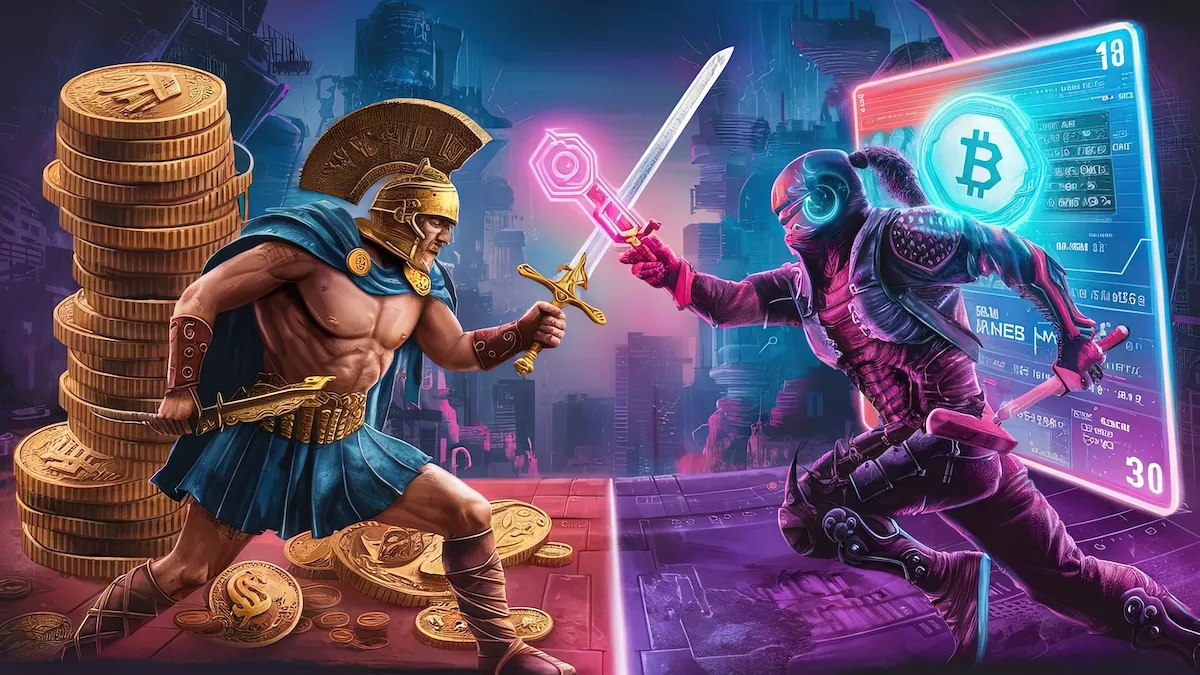
Blockchain Gaming Revenue
The GameFi sector’s market cap currently stands at $26.5 billion, a significant milestone compared to traditional gaming’s $177.9 billion global revenue. While blockchain gaming represents a smaller slice of the overall gaming industry, its rapid growth and innovative revenue models are attracting attention from investors and developers alike.
Blockchain games offer unique opportunities for players to own and monetize in-game assets, creating a player-driven economy that traditional games cannot replicate. Play-to-earn mechanics, NFT integration, and decentralized governance models are reshaping player expectations and revenue streams, driving GameFi’s exponential growth trajectory.
While challenges remain in user retention and onboarding, the industry’s continued collaboration with traditional gaming studios and blockchain infrastructure providers bodes well for sustained growth. As more players and developers embrace the possibilities of Web3 gaming, the $50 billion market valuation projected for year-end seems increasingly within reach.
Future Outlook
The GameFi sector’s rapid evolution and growing mainstream adoption set the stage for continued innovation and expansion in the coming quarters. As blockchain gaming becomes increasingly integrated into the broader gaming ecosystem, we can expect to see:
Enhanced player experiences through AI-driven engagement strategies
Increased cross-platform compatibility and interoperability
Continued collaboration between traditional gaming studios and blockchain developers
Expansion of decentralized finance (DeFi) and non-fungible token (NFT) integration
* Regulatory advancements and industry standards to support sustainable growth
With GameFi’s trajectory pointing toward a $50 billion valuation and mainstream recognition, the sector’s future looks promising as it continues to redefine the gaming landscape with decentralized, player-centric experiences.
about the GameFi sector’s milestones and challenges in Q1 2025.
The GameFi sector has achieved remarkable milestones in the first quarter of 2025, with daily active users exceeding 1 million and market projections indicating a potential $50 billion valuation. This report delves into the key developments in user growth, blockchain activity, and revenue streams, shedding light on the challenges and opportunities that lie ahead for the industry.
User Growth Trends
The GameFi ecosystem has seen explosive growth in user numbers, surpassing 1 million daily active users in Q1 2025. This surge marks a significant uptick from just 63,000 users in early 2021 and aligns with industry forecasts projecting a $50 billion market size by the end of the year. Despite this impressive growth, the sector faces retention challenges, as over 60% of Web3 gamers abandon games within the first month due to various factors like poor game mechanics and lack of long-term incentives.
Several projects have successfully tackled these retention challenges by implementing dynamic gameplay, loyalty reward systems, community-driven development, and balanced tokenomics. The entry of traditional gaming studios into the blockchain space has further accelerated mainstream adoption, bridging the gap between conventional gaming and GameFi experiences.
Chain Activity
In Q1 2025, Solana emerged as a dominant player in the GameFi landscape, capturing approximately 50% of all application fees. This dominance can be attributed to memecoin speculation and decentralized exchange trading, positioning Solana as the preferred platform for developers seeking scalability and low transaction costs. Ethereum, on the other hand, maintained a significant market share, accounting for 20-30% of trading fee share.
The rise of Telegram Mini-Apps, such as Tap-to-Earn platforms like Notcoin and Hamster Kombat, has attracted millions of users by providing simplified interfaces and seamless payment integrations with mainstream services like ApplePay and PayPal. Other chains like Base, Injective, and TON have also shown strong GameFi activity, leveraging their unique strengths to cater to the growing demand for blockchain gaming experiences.
Traditional vs. Blockchain Gaming Revenue
The GameFi sector’s market cap currently stands at $26.5 billion, a notable milestone compared to traditional gaming’s $177.9 billion global revenue. Blockchain games offer players unique opportunities to own and monetize in-game assets, creating a player-driven economy that traditional games cannot replicate. Play-to-earn mechanics, NFT integration, and decentralized governance models are reshaping player expectations and revenue streams, propelling GameFi’s rapid growth trajectory.
Future Outlook
Looking ahead, the GameFi sector is poised for continued innovation and expansion, driven by enhanced player experiences, increased cross-platform compatibility, and ongoing collaboration between traditional gaming studios and blockchain developers. The sector is also expected to witness further integration of decentralized finance (DeFi) and non-fungible token (NFT) technologies, along with regulatory advancements to support sustainable growth.
With a $50 billion valuation on the horizon and growing mainstream recognition, the GameFi sector’s future looks promising as it continues to redefine the gaming landscape with decentralized, player-centric experiences. This decline reflects investor caution in the face of an increasingly crowded GameFi space, where differentiating projects based on sustainable economic models and gameplay innovation is essential.
Technical barriers to entry persist for many players, with wallet management and blockchain transaction fees proving cumbersome for mainstream adoption. Projects that streamline these processes through user-friendly interfaces and gasless transactions stand to attract a broader player base.
In conclusion, the GameFi sector presents a promising frontier for innovation and economic growth, yet it faces critical challenges that must be addressed for sustained success. By focusing on player engagement, regulatory compliance, funding strategies, and user accessibility, blockchain gaming projects can overcome these hurdles and realize their full potential in the gaming industry.
As the industry evolves and matures, GameFi has the opportunity to revolutionize the way we think about gaming, ownership, and community interaction. With the right strategies and innovations, blockchain gaming could become a dominant force in the gaming landscape, offering players new and exciting experiences while reshaping the traditional gaming industry as we know it.
The landscape of GameFi, where gaming and decentralized finance intersect, is undergoing a significant transformation in 2025. The shift from speculative tokenomics to sustainable business models has forced projects to prioritize engaging gameplay experiences over token price speculation. This change has created a challenging yet opportunistic environment for developers in the GameFi sector.
One of the primary technical limitations hindering mainstream GameFi experiences is the slow transaction speeds on some blockchain networks, making real-time gameplay difficult. Additionally, wallet usability remains a barrier for non-technical users, and cross-chain asset transfers are complex for average players. Scalability constraints during peak usage periods further hinder the seamless gaming experience.
Despite these challenges, several transformative opportunities are reshaping the GameFi landscape. Generative AI implementation has significantly enhanced NPC interactions and anti-cheat systems, leading to a 30-40% increase in player engagement for early adopters. Multi-chain interoperability solutions have opened up new possibilities for cross-chain NFT transfers, reducing fees and simplifying the user experience. The potential easing of regulations under new U.S. leadership has reignited developer interest in the North American market, expanding the user base for GameFi applications.
Looking ahead to Q2 2025 and beyond, AI-driven personalization is expected to become standard in top-tier GameFi projects. These systems will dynamically adjust game elements based on individual player behaviors, enhancing player retention. Consolidation in the GameFi sector may lead to the emergence of comprehensive GameFi ecosystems rather than standalone games. Institutional investors are increasingly focusing on projects with sustainable revenue models, signaling a shift towards value-based investments in the sector.
Key developments anticipated in the coming quarters include traditional gaming companies integrating blockchain technology, cross-platform play becoming standard for major GameFi titles, improved token utility models reducing market volatility, and enhanced social features fostering stronger community cohesion. Projections suggest a potential for 1.5 billion active GameFi users globally by the end of 2027, driven by mobile-first experiences in emerging markets and improved user onboarding processes.
Overall, the GameFi sector is evolving rapidly, with developers embracing new technologies and approaches to address existing challenges and unlock growth opportunities. By prioritizing engaging gameplay experiences and sustainable business models, the future of GameFi looks promising and poised for significant growth in the years to come. The Evolution of GameFi: What the Future Holds
As frameworks stabilize in the GameFi space, we can expect to see more compliant projects making their way onto mainstream exchanges. This will not only improve liquidity but also boost investor confidence in the sector. With a more structured approach, GameFi projects will be better positioned to thrive in the long term.
One of the key drivers of innovation in the gaming industry is the expansion of artificial intelligence (AI) technology. AI is not only enhancing gameplay personalization but also revolutionizing game development processes. From generating assets to crafting storylines and even dictating NPC behaviors, AI is streamlining production timelines and cutting costs. This advancement will level the playing field, allowing indie developers to compete with larger studios on a more equal footing.
Looking ahead, interoperability between different GameFi ecosystems could be the defining feature of the next phase of blockchain gaming. Projects that enable players to seamlessly transfer assets, achievements, and identities across various titles will be at the forefront of capturing long-term player loyalty. This interconnected approach will reshape player expectations and create a more immersive gaming experience.
In summary, the GameFi landscape is undergoing rapid evolution, shifting from speculative hype to a more sustainable and player-centric model. The focus is now on long-term engagement and utility, ensuring that players remain actively involved in the gaming ecosystem. As we move forward, we can expect to see continued growth and innovation in the GameFi space, with exciting new developments on the horizon.
Stay tuned for the latest updates and trends in GameFi as the industry continues to evolve and expand. Exciting times lie ahead for gamers and investors alike in this dynamic and ever-changing sector.