
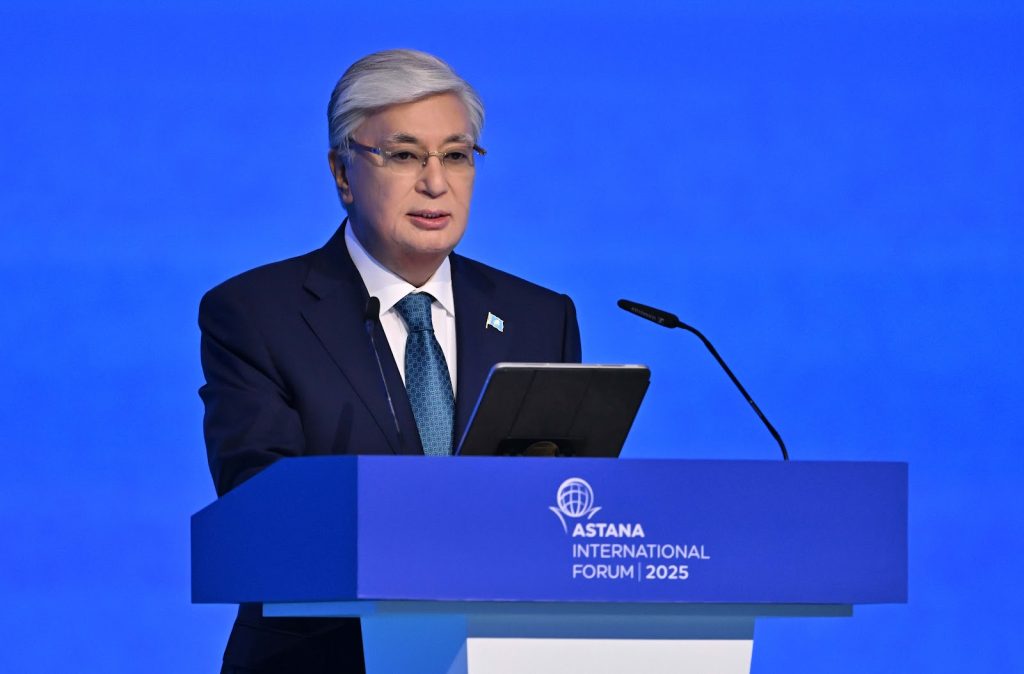
Kazakhstan is making strides in the world of cryptocurrency with the announcement of “CryptoCity,” a pilot zone where digital assets can be used for everyday transactions. President Kassym-Jomart Tokayev unveiled this initiative during the Astana International Forum 2025, marking a significant step towards modernizing the country’s financial infrastructure.
CryptoCity will serve as a regulated sandbox for testing the use of cryptocurrencies in purchasing goods, services, real estate, and investments. While specific details are still forthcoming, the project aligns with Kazakhstan’s ongoing efforts to explore the potential of digital assets and integrate them into the economy.
The pilot zone is part of a broader strategy to attract technology ventures and leverage the growth of the domestic crypto market. Kazakhstan has been actively building its digital financial infrastructure since launching a central bank digital currency (CBDC) pilot in February 2023. The programmable nature of the CBDC was designed to combat corruption and enhance transparency.
In November 2023, the country introduced the digital tenge in pilot mode, utilizing blockchain-based smart contracts to facilitate programmable payments. Participating banks issued digital vouchers and cards to support the platform, while a partnership with Binance allowed for CBDC payments with selected merchants. Binance has since expanded its presence in Kazakhstan, further solidifying the country’s position in the digital asset landscape.
Minister of Digital Development, Zhaslan Madiyev, indicated that officials are currently scouting locations for CryptoCity, with the new city of Alatau being a top contender. Located near Kazakhstan’s southeastern border, Alatau is already home to a special economic zone and numerous science institutions, making it an ideal candidate for integrating a cryptocurrency-powered city.
Madiyev highlighted the potential for cryptocurrency to be used in various transactions within CryptoCity, including payments at restaurants, cafes, real estate purchases, and investments. With the city already under development, the next step is to establish a legal framework that facilitates the circulation of cryptocurrencies and legitimizes them as a payment method.
In addition to the CryptoCity initiative, lawmakers in Kazakhstan are advocating for the establishment of a state-supported “crypto bank” to enhance oversight and regulation within the expanding crypto sector. MP Azat Peruashev proposed the idea in Parliament, citing the need for clear legal infrastructure to bring crypto activities out of the shadows and protect users from illicit schemes.
Prime Minister Olzhas Bektenov affirmed the government’s interest in exploring crypto banks as part of a broader digital asset strategy. These institutions would offer exchange, storage, and transaction services, supported by licensed operators under the Astana International Financial Centre. The move comes as authorities aim to address the prevalence of unregulated crypto transactions and enhance enforcement measures.
Overall, Kazakhstan’s foray into the world of cryptocurrencies through initiatives like CryptoCity and the proposed crypto bank signifies a significant step towards embracing digital assets and fostering innovation in the financial sector. The country’s commitment to modernization and regulatory clarity bodes well for its position in the global crypto landscape.