
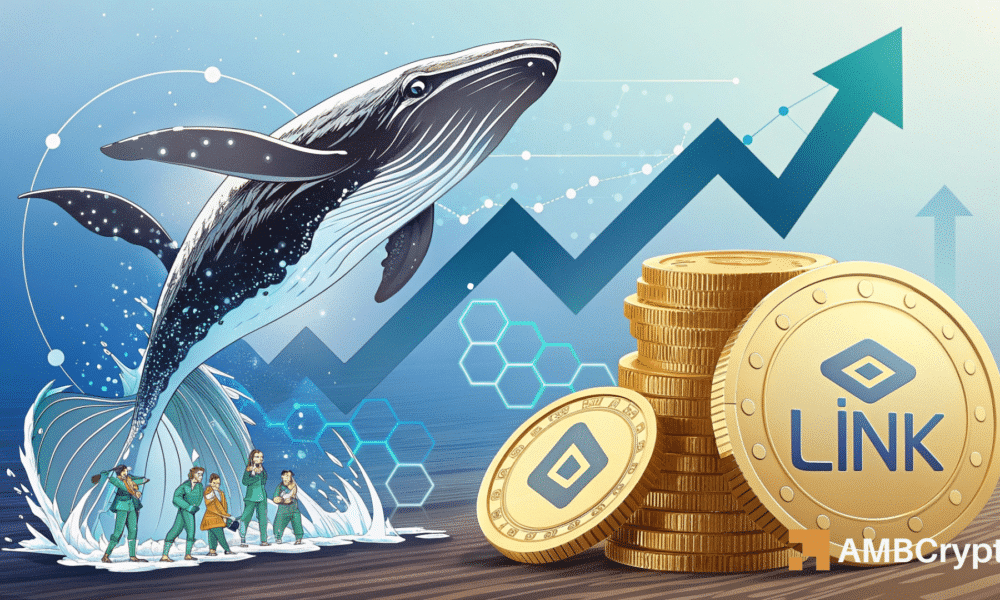
Chainlink (LINK) has been on a tear recently, with the cryptocurrency gaining over 30% in the past week and hitting a trading volume of $1.35 billion. Currently trading near $21, LINK seems to be gearing up for a potential rally, supported by on-chain data and macroeconomics.
One key factor driving LINK’s price surge is whale accumulation. Data from Lookonchain revealed significant buying activity, with whales moving large amounts of LINK from exchanges to wallets. In just two days, whales withdrew a total of 510,000 LINK worth $11.13 million from Binance to Compound. Additionally, two other whales purchased 59,560 LINK and 44,846 LINK, adding another $13 million to the influx. This wave of buying indicates both new and existing whales are bullish on LINK.
Furthermore, the number of Daily Active Addresses for LINK has seen a significant increase, jumping from 5,500 to 9,410 in just a week. This uptick in active addresses suggests growing retail and whale participation in the market.
Institutions are also ramping up their exposure to LINK, with collaborations with global giants like Fidelity, Swift, DTCC, Citi, JPMorgan, and BNP Paribas. Chainlink’s decentralized finance (DeFi) volumes have been on the rise, reaching $1.298 billion in the last 24 hours, thanks to Chainlink Reserve enabling fiat payments tied to the token’s economics.
From a technical standpoint, LINK recently broke out of a descending trendline that started last December after a double bottom retest at $18. The next key level to watch is $24, with a potential push above that opening the path to $30. Analysts like Posty have even gone as far as calling LINK “undervalued” and setting a bold target of $100, suggesting that LINK’s market cap could eventually reach $100 billion.
In conclusion, Chainlink’s recent price action, whale accumulation, institutional involvement, and technical breakout all point towards a positive outlook for the cryptocurrency. With the potential to reach new highs, LINK is definitely a coin to watch in the coming days and weeks. The Benefits of Adopting a Plant-Based Diet
In recent years, there has been a significant increase in the number of people adopting a plant-based diet. This dietary choice involves consuming mostly or entirely plant-based foods, such as fruits, vegetables, whole grains, nuts, seeds, and legumes, while avoiding animal products like meat, dairy, and eggs. There are many reasons why people are choosing to make this shift in their eating habits, and the benefits of a plant-based diet are numerous.
One of the primary benefits of a plant-based diet is its impact on overall health. Numerous studies have shown that individuals who follow a plant-based diet tend to have lower rates of chronic diseases such as heart disease, diabetes, and cancer. This is largely due to the high levels of antioxidants, vitamins, minerals, and fiber found in plant-based foods, which help to reduce inflammation and protect against disease.
Plant-based diets are also typically lower in saturated fat and cholesterol, which can help to lower blood pressure and improve cardiovascular health. By eating a variety of plant-based foods, individuals can also ensure that they are getting all of the essential nutrients they need to support their overall health and well-being.
In addition to the health benefits, adopting a plant-based diet can also have a positive impact on the environment. The production of animal products is a major contributor to greenhouse gas emissions, deforestation, and water pollution. By reducing or eliminating the consumption of animal products, individuals can help to reduce their carbon footprint and lessen their impact on the planet.
Furthermore, plant-based diets are often more sustainable and cost-effective than diets that rely heavily on animal products. Plant-based foods tend to be more affordable and readily available, making it easier for individuals to make healthier choices for themselves and the planet.
Finally, many people find that adopting a plant-based diet can lead to increased energy levels, improved digestion, and a greater sense of well-being. Plant-based foods are often easier for the body to digest and provide a steady source of energy throughout the day. By fueling the body with nutritious plant-based foods, individuals can feel more energized, focused, and alert.
In conclusion, there are numerous benefits to adopting a plant-based diet, including improved health, reduced environmental impact, and increased energy levels. Whether you choose to go completely plant-based or simply incorporate more plant-based foods into your diet, making this dietary shift can have a positive impact on your health and the planet. So why not give it a try and see how a plant-based diet can benefit you?